
HUL Series Linear LED Modules
Manufacturing of linear lighting modules offering stable brightness, uniform illumination, and energy-efficient operation.
High efficiency linear LED modules are widely used in applications requiring high uniformity of illumination, consistent light output, and long-term stability. However, traditional linear designs often face challenges such as uneven brightness, heat dissipation from the LED strip, and luminous flux decay over time, all of which impact performance and lifespan.
Higntek addresses these challenges by meticulously crafting high-efficiency linear LED modules from the initial engineering stage through optimized LED layout, precise PCB design, and advanced thermal management. We ensure uniform light distribution and efficient heat dissipation throughout the module, achieving stable, high-lumen output while reducing energy consumption.
Our HUL series linear LED modules are designed to Zhaga standards, featuring a slim and compact design for easy installation in narrow luminaires. Custom sizes are also available, ensuring compatibility with a wide range of lighting systems. Ideal for commercial lighting, display backlighting, and architectural applications, they help customers achieve reliable performance, improved visual consistency, and reduced long-term operating costs.
Engineered for Uniform Illumination and Long-Term Stability
Our linear LED modules are designed to meet stringent requirements for uniform light distribution, thermal balance, and continuous operation. By optimizing LED spacing, selecting high-efficiency LED chips, and using PCB materials with excellent heat dissipation, such as aluminum substrates, we minimize brightness fluctuations and heat buildup within the module.
- Light Uniformity: ≥ 90–95% uniformity across full module length, eliminating hotspots and dark zones
- Luminous Efficiency: up to 170–265 lm/W, ensuring high brightness with reduced energy consumption
- Thermal Control: temperature variation along strip controlled within ±3–5°C, improving lifespan and stability
- Lumen Maintenance: < 5% degradation after 1,000 hours continuous operation
- Module Length Consistency: precision PCB design ensures stable performance across custom lengths up to 1 meter+
Product
Filter
Need customization?
Contact us anytime for professional engineering assistance. Communicate with engineers to discuss your lighting project specifications and develop your customized LED module solution.
-
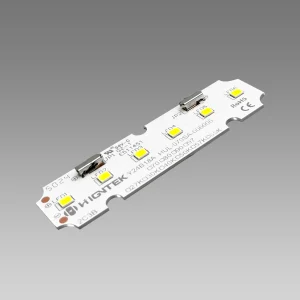 HUL Series Linear LED Modules
223lm/W High-Efficacy Linear Modules 20×70mm (250lm)
-
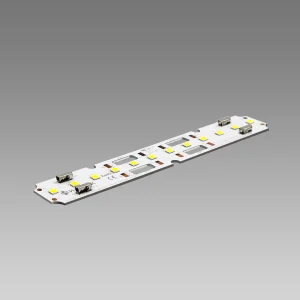 HUL Series Linear LED Modules
225lm/W High-Efficacy Linear Modules 20×140mm (500lm)
-
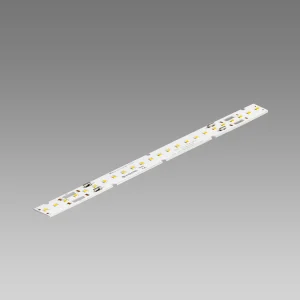 HUL Series Linear LED Modules
225lm/W High-Efficacy Linear Modules 20×280mm (990lm)
-
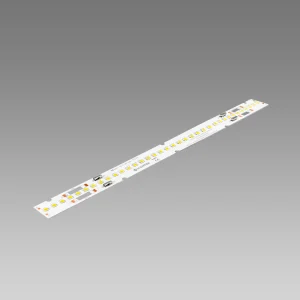 HUL Series Linear LED Modules
222lm/W High-Efficacy Linear Modules 20×280mm (1500lm)
-
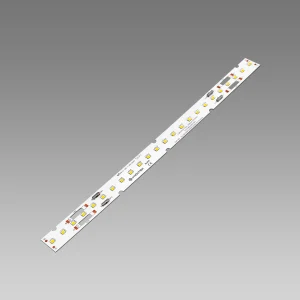 HUL Series Linear LED Modules
72V 224lm/W High-Efficacy Linear Modules 20×280mm (990lm)
-
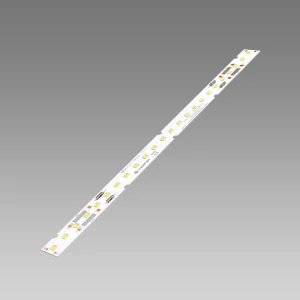 HUL Series Linear LED Modules
36V 224lm/W High-Efficacy Linear Modules 20×280mm (990lm)
-
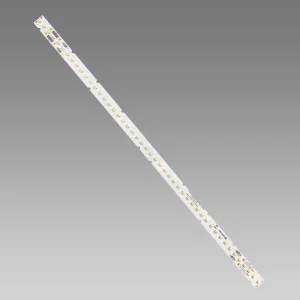 HUL Series Linear LED Modules
48V 224lm/W High-Efficacy Linear Modules 20×560mm (1980lm)
-
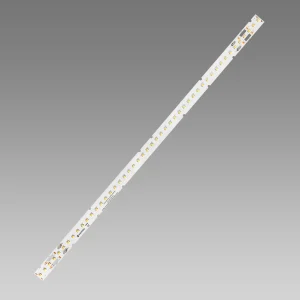 HUL Series Linear LED Modules
36V 224lm/W High-Efficacy Linear Modules 20×560mm (1980lm)
-
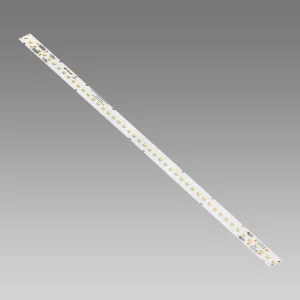 HUL Series Linear LED Modules
72V 224lm/W High-Efficacy Linear Modules 20×560mm (1980lm)
-
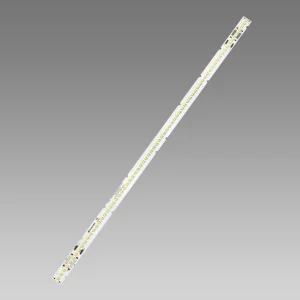 HUL Series Linear LED Modules
54V 224lm/W High-Efficacy Linear Modules 20×560mm (2980lm)
Engineered Capabilities Behind High-Performance Linear LED Modules
Delivering high efficiency linear LED modules requires more than component selection — it demands precise engineering, controlled manufacturing, and validated performance. Higntek integrate design optimization, advanced production processes, and rigorous testing systems to ensure every module meets high standards for uniformity, efficiency, and long-term reliability.
Precision Optical & Thermal Engineering
Our linear LED modules are engineered with optimized LED spacing, beam distribution, and thermal pathways to ensure consistent illumination across the entire length. By combining optical simulation and thermal analysis, we minimize hotspots, reduce lumen loss, and enhance overall system efficiency.
High-Heat-Dissipation PCB Structure Design
We utilize aluminum and copper-based PCBs with optimized circuit layouts to improve heat transfer efficiency. This reduces thermal resistance and ensures stable electrical performance, even under high-power and continuous operation conditions.
High-Precision SMT & Scalable Production
With automated SMT lines and strict process control, we achieve consistent LED placement accuracy and soldering quality. Our production system supports both rapid prototyping and high-volume manufacturing with stable output and short lead times.
Comprehensive Testing and Validation
Each LED module undergoes rigorous testing, including luminous performance measurement, thermal performance evaluation, aging testing, AOI, and X-ray inspection. This ensures stable output, satisfactory light performance, and reliable long-term operation in real-world applications.
| Specification | Higntek Capability |
|---|---|
| Luminous Efficiency | Up to 170–265 lm/W |
| CCT Range | 2200K – 6500K |
| CRI Options | 70 / 80 / 90 / 95+ |
| Beam Angle | 30° / 60° / 90° / 120° / 160°/customize |
| Color Functionality | Monochrome/Bi-color/RGB/RGBW, RGBIC, and RGBCCT |
| Dimming | 0-10V / DALI / PWM / TRIAC |
| Driver Scheme | Driverless&DOB or External Driver |
| LED Brands | Cree/Osram/Brightray/Pure/Seoul/Nichia… |
| Light Uniformity | ≥ 92–96% across full module length |
| Thermal Gradient Control | ≤ ±3°C across 1 meter linear module |
| Lumen Maintenance (1000h) | ≥ 95% lumen retention |
| Color Consistency (SDCM) | ≤ 3-step MacAdam ellipse |
| PCB Material Options | Aluminum / Copper base (high thermal conductivity) |
| Operating Temperature Range | -30°C to +85°C stable operation |
| Maximum Module Length | Customizable up to 2000mm |
| Power Efficiency | Up to 92–96% system efficiency |
| LED Placement Accuracy | ± 0.05 mm SMT precision |
| Lifetime Expectancy | ≥ 50,000–60,000 hours |
| Production Capacity | Up to 200000+ linear modules/month |
.webp)
.webp)


Application of Linear LED Module
Our high efficiency linear LED modules are widely used in applications where uniform illumination, energy efficiency, and long-term reliability are critical. Explore how we help clients solve real-world lighting challenges and achieve measurable performance improvements.
Office Linear Lighting
Office Linear Lighting
Lightbox Backlighting System
Lightbox Backlighting System
Architectural & Cove Lighting
Architectural & Cove Lighting
Industrial Lighting
Industrial Lighting
One-stop professional engineering-customized LED module supplier. Reduce the risk of development failures and get to market faster.
Comprehensive One-Stop Service
From requirement concept, light source selection, solution design, sample production, component procurement/PCB manufacturing, LED PCBA packaging, soldering, functional testing, LED module assembly to delivery, we provide complete prototyping and mass production services. Shorten development time and ensure stable and rapid delivery.

Advanced Manufacturing Equipment
We have an advanced fully automated production line equipped with 25 Samsung SMT placement machines, and possess in-house AOI, X-ray inspection, and testing capabilities. From production and assembly to testing, we ensure high-precision, consistent, and reliable LED module manufacturing for demanding lighting applications.
Traceable Quality Control System
From raw materials to final testing, every process is traceable. Production processes are certified to ISO 9001 and ISO 13485 quality management systems, ensuring consistent performance and complete quality traceability. A 5+95 prototype service validates designs and materials before mass production, reducing risk.
Stable & Scalable Supply Chain
We collaborate with thousands of suppliers worldwide, including renowned LED brands, optical lenses, and drivers. Leveraging our established component sourcing network, we offer complete BOMs, replacement component recommendations, and bill of materials cost optimization solutions. Ensure stable materials, high cost-effectiveness, and timely delivery for both prototyping and mass production of LED modules.
Experienced Engineering Team
HIGNTEK assigns a dedicated account manager to each client. Each project is supported by a team of experienced engineers and technical experts. We provide systematic engineering solutions in areas such as thermal management, optical design, and PCB layout to help customers optimize performance and manufacture high-performance LED modules suitable for specific applications.
Meets global standards
We incorporate international certifications (CE, RoHS, and UL, etc.) and our clients’ local standards from the design stage, making compliance a core aspect of product development. This ensures that the quality and manufacturing technology of our LED modules meet international market safety and reliability standards, helping customers successfully complete product certification and enter the application market.
What is a linear LED module?
Linear LED modules are lighting modules consisting of LED chips, a strip-shaped PCB, optical lenses, and necessary connectors and drivers. The LEDs are arranged in a continuous or semi-continuous line and mounted on a rigid PCB (aluminum or copper base). Unlike discrete LED boards, linear modules are designed to provide simple, uniform, and efficient linear lighting over long distances, making them the preferred choice for architectural, commercial, office, and industrial lighting systems.
Higntek offers common standard lengths including 140mm, 160mm, 280mm, 320mm, 560mm, and 1120mm to facilitate modular design needs for luminaire manufacturers. Custom sizes, shapes, power, and optical performance are also supported to meet specific OEM/ODM project requirements.
Features of Linear LED Modules.
While its name suggests “linear,” from a professional engineering perspective, the true value of linear LED modules lies not in their geometry, but in their ability to simultaneously balance three constraints during long-term operation: uniform illumination, thermal stability, and luminous efficacy. Achieving all three simultaneously in most lighting systems is no easy feat. Poorly designed linear LED modules often exhibit problems such as energy loss, brightness degradation along the light strip, or heat buildup at specific nodes.
- Scalability: Unlike traditional bulbs or COB solutions, SMD linear LED modules can be expanded or customized with minimal redesign, making them highly suitable for OEM and project-based production. However, this flexibility requires a foundation of professional system-level engineering design to maintain consistent optical and electrical performance across different lengths.
- Uniform Illumination: By selecting appropriate LED chips and strategically placing them on the PCB, uniform, spotless, and contrast-free lighting effects can be achieved across the linear range.
- Luminous Efficacy: In long-distance installations, even small efficiency losses accumulate with increasing distance. For example, in linear luminaires 2-3 meters long, uneven heat distribution can cause brightness variations exceeding 10%, which is particularly noticeable in commercial environments. Efficient design mitigates this problem by reducing heat generation from the light source and stabilizing the output of the entire module.
| Category | High-Efficiency Linear Module | Standard Linear Module | Fluorescent Lamp | Halogen Lamp |
|---|---|---|---|---|
| Luminous Efficiency | 170–265 lm/W | 120–160 lm/W | 90 lm/W | 25 lm/W |
| Light Uniformity | High (5 stars) | High (5 stars) | Medium (3 stars) | Low (2 stars) |
| Lifespan | 50,000+ hours | 50,000+ hours | 15,000 hours | 2,000 hours |
| Maintenance Cost | Low | Low | Medium | High |
| Smart Control | Supported | Supported | Not supported | Not supported |
| Color Features | Supported | Supported | Not supported | Not supported |
One of the most easily overlooked advantages of high-efficiency linear LED modules is their uniform thermal performance. In ultra-long linear LED modules, heat accumulation is rarely uniform. High-efficiency linear LED modules generate less heat overall, reducing the temperature gradient and contributing to consistent lumen output throughout the entire length. This is something that cannot be corrected later by optics alone and must be planned for during the initial engineering design phase of the project. In fact, the difference between standard and high-efficiency linear LED modules becomes apparent after installation. High-efficiency designs typically offer more stable brightness, lower temperature gradients, and longer lifespan.
Applications of linear LED modules.
In most cases, linear LED modules are chosen due to the need for visual continuity, controllable glare, and stable lighting performance over large areas. Their flexibility and high efficiency make them suitable for a variety of commercial, industrial, and architectural lighting projects. We offer systematic engineering customization solutions for the optical design, power configuration, driver options, and installation methods of linear LED modules for different application scenarios.
- Office Lighting.
In office ambient lighting, uneven illumination can lead to eye fatigue and decreased work efficiency. Linear LED modules are often used in track lights and Troffer lights to provide soft, uniform, flicker-free, and stable lighting within workspaces. We can customize them with diffusers and low-glare optics for specific needs. - Commercial and supermarket lighting.
Commercial environment lighting needs to be not only uniform but also aesthetically pleasing and flexible. Linear modules are typically integrated into shelves, ceilings, and display racks to create continuous light that guides customer vision. Linear modules enhance product display by providing soft, continuous, and high color rendering index (CRI ≥ 90) lighting while minimizing glare. - Industrial Linear Lighting.
In industrial environments such as factories, warehouses, construction sites, mines, and logistics centers, linear LED modules are commonly used in lighting equipment such as high-bay lights, tri-proof lights, and explosion-proof lights. High-efficiency linear LED modules reduce heat buildup and energy consumption, thereby lowering failure rates and maintenance costs. In a 2000㎡ warehouse renovation case, replacing old fluorescent tubes with high-efficiency linear LED modules reduced lighting-related maintenance by approximately 35% within two years, and energy consumption was directly reduced by 50%. - Architectural Lighting.
Due to their flexible length and customizable optical effects, linear LED modules are widely used in facade lighting, hotels, art buildings, and convention centers. Whether for recessed lighting, indirect lighting, or suspended decorative lighting, linear LED modules can create seamless, continuous lighting without visible breaks. We achieve stable and controllable optical lighting output through the rational layout of LED spacing, color functions, and dimming control.
How to design a high-efficiency linear LED module for uniform lighting?
Designing high-efficiency linear LED modules for uniform illumination is not about maximizing brightness, but about controlling light distribution and heat dissipation. Higntek ensures consistent lighting performance along the entire length of the module and achieves an optical efficiency of up to 265 lm/W through systematic engineering design, including BOM selection, thermal management, optical engineering controls, and electrical design.
Optical Design.
I’d like to share a piece of advice: LED spacing, diffusion, and light shaping must be correctly defined during the design phase; otherwise, no amount of electrical adjustments will eliminate visible glare.
- LED Spacing: The spacing between LEDs must be matched to the diffuser characteristics and mounting distance (less than the distance from the LED to the diffuser) to prevent hot spots. However, while overly dense spacing can improve uniformity, it reduces system efficiency due to light field overlap.
- Diffuser Selection: Appropriate use of milky white diffusers can break up the image of individual LEDs. Although standard milky white diffusers typically cause 10-20% light loss, they do significantly improve light smoothness and uniformity. Diffuser selection requires a trade-off between efficiency and visual comfort.
- Optical Lenses: Proper use of lenses can achieve specific beam angles and reduce glare. However, in our experience, even with uniform LED output, a poorly aligned lens system can cause inconsistent brightness along the module’s lines.
BOM Selection.
Compatibility of all components in an LED module is a greater determinant of module performance than the peak specification of any single component.
- LED Chips: Choose LEDs with high luminous efficiency, typically targeting 120-160 lm/W. Higher specification LEDs can also be selected based on lighting needs, while considering forward voltage consistency and thermal resistance.
- Driver: Properly combining high-efficiency drivers or DOB technology ensures stable output current. Driver stability can improve brightness uniformity without altering the LED layout.
Thermal Management.
High-efficiency linear LED modules require efficient thermal management, as thermal performance directly determines the luminous efficiency and lifespan of the linear LED module.
- PCB Materials: For linear LED modules, choose a metal-based PCB with high heat dissipation (aluminum substrate is most common, copper substrate is used in specific high-performance cases) to dissipate the heat generated by the chip.
- Temperature Interface Materials: Use high-quality thermally conductive tape or paste to ensure effective heat transfer between the PCB and the heatsink. Inefficient TIM can cause LED module efficiency to decrease by 5% to 12% over time.
- Heat dissipation design: relying solely on the materials themselves is not enough. The design of the heat dissipation path—including copper trace distribution and heat diffusion—plays a crucial role. In some practical cases, localized overheating can be significantly avoided simply by improving the PCB layout, without upgrading materials.
Electrical Structure.
The electrical design of linear LED modules is often underestimated, especially in long-distance configurations where voltage drop becomes very significant.
- Voltage Drop: Linear LED modules larger than 500mm require particular attention to voltage drop control. Constant current design should be used whenever possible, rather than constant voltage design, to avoid brightness reduction with length.
- Modular Connection: Segmenting long linear LED modules not only effectively controls voltage drop but also facilitates installation. For example, using WAGO quick connectors at both ends for “click-and-click” assembly.
- Power Supply: Optimize power levels according to actual luminous flux requirements, avoiding unnecessary excessive voltage or current that could increase losses in drivers and PCB traces.
Through extensive project production experience, we’ve come to firmly believe that uniform linear lighting cannot be achieved through a single design; it requires the simultaneous coordination of optics, thermal, materials, and electrical systems. Improving only one aspect while neglecting others often leads to diminishing luminous efficacy or introduces new quality issues.
In our own engineering design process, achieving high-efficiency linear components requires balancing these factors. For example, pursuing maximum lumen/watt efficiency without adjusting the heat dissipation path often results in long-term performance instability. Similarly, optimizing optics without addressing electrical consistency issues will still produce significant dispersion inhomogeneities.
Ultimately, a well-designed high-efficiency linear LED module must not only demonstrate high efficiency on paper but also achieve stable and uniform light output along its entire length under long-term operating conditions. This is the standard for measuring whether a design is truly high-performance or merely optimized to meet the specifications.
What is the typical luminous efficacy of your linear LED modules?
Depending on the configuration, our modules can achieve efficiencies of up to 160–265 lm/W, ensuring high brightness and low power consumption.
Can the length and layout of the linear LED modules be customized?
Yes, we offer fully customized PCB designs, including module length, LED spacing, and circuit layout, to meet your application needs.
How do you ensure uniform light distribution?
We optimize LED spacing, optical layout, and PCB design to achieve light uniformity of over 90-95%, minimizing hot spots and dark areas.
How to manage the heat dissipation of linear LED modules?
We use thermally optimized PCB materials (such as aluminum substrates) and design heat dissipation paths to reduce temperature variations and extend lifespan.
What certifications do your LED modules comply with?
Depending on project requirements, our products can meet international standards such as CE, ISO, RoHS, and UL. We can apply for and obtain corresponding certifications according to customer market requirements if necessary.
How can I work on a project with Hignetek?
You can send us your design files or requirements. Our engineering team will provide technical assessment, communication guidance, and a quotation. Once cooperation is confirmed, we will arrange for component procurement, manufacturing, inspection and testing, packaging, and shipping.
Do you accept small-batch orders or only large-scale production?
We support prototyping and small-batch orders to facilitate low-cost testing for our customers. We also support large-scale production and maintain consistent quality control.
How do you ensure quality consistency in large orders?
We ensure quality consistency in large-batch orders through the following methods: raw material inspection upon arrival, die bonding/dispensing/wire bonding inspection during production, AOI/X-ray/functional testing, aging testing, and traceability management.
What is your typical lead time for prototype and mass production?
Prototypes are typically delivered within 5-7 days. The mass production cycle for standard LED modules is approximately 10-15 days. Specific lead times will vary depending on quantity, specifications, and degree of customization. We typically assess technical parameters and inventory status comprehensively to recommend suitable solutions for our clients.
Other high-efficiency LED module series
We‘d Like to Hear From You
Tell us about your application, and our engineering team will provide a tailored LED lighting module solution with optimized performance, cost, and reliability.