
HUB Series Diffused LED Modules
Engineered for wider beam angles, hotspot-free lighting, and optimized luminous efficiency in signage, backlighting, and commercial display applications.
Diffused LED modules are designed to deliver soft, evenly distributed illumination while maximizing usable light output. In applications such as signage, lightboxes, channel letters, and backlit displays, poor optical design often leads to hotspots, uneven brightness, and wasted energy — reducing both visual quality and system efficiency.
Higntek high efficiency diffused LED modules are engineered to solve these challenges through optimized LED spacing, optical diffusion design, and thermally stable PCB layouts. By balancing beam angle, luminous efficiency, and light uniformity, we help clients achieve brighter displays, improved lighting consistency, and lower operating costs.
Whether for commercial signage or custom lighting projects, our diffused LED solutions are built for performance, reliability, and scalable production.
Custom production of high-uniformity, diffused LED modules.
We develop diffuse LED modules specifically for applications requiring wide-angle lighting, uniform light distribution, and efficient light utilization. By optimizing lens structure, LED selection and layout, and precise PCB design, we ensure brightness consistency from the initial engineering design stage, while minimizing light loss and energy waste.
- Beam Angle Optimization: up to 160°–175° wide beam coverage for broader illumination range.
- Light Uniformity Performance: achieves >90% illumination uniformity in backlit and signage applications.
- Hotspot Reduction: reduces visible hotspots by up to 85% through optimized diffusion structure and LED spacing.
- Optical Utilization Efficiency: up to 92% effective light usage, minimizing lumen waste and improving energy efficiency.
- Operating Lifetime: supports 50,000+ hours stable operation under standard conditions.
- Color Consistency: ≤ 3 SDCM for smooth and uniform visual output.
Product
Filter
Need customization?
Contact us anytime for professional engineering assistance. Communicate with engineers to discuss your lighting project specifications and develop your customized LED module solution.
-
-300x300.webp) HUB Series Diffused LED Modules
HUB Series Diffused LED Modules196LM/W Diffuse 24V Rigid Light Strip 480mm
-
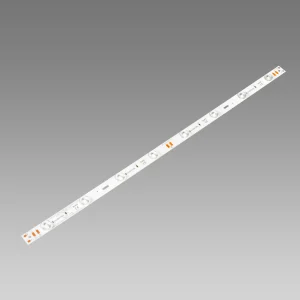 HUB Series Diffused LED Modules
196LM/W Diffuse 12V Rigid Light Strip 480mm
-
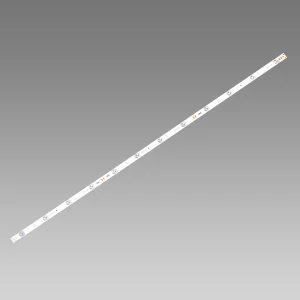 HUB Series Diffused LED Modules
208LM/W Diffuse 24V Rigid Light Strip 930mm
-
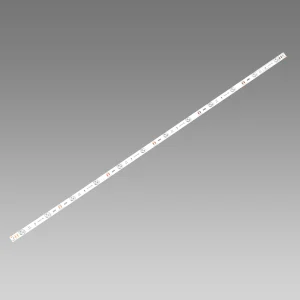 HUB Series Diffused LED Modules
208LM/W Diffuse 12V Rigid Light Strip 930mm
-
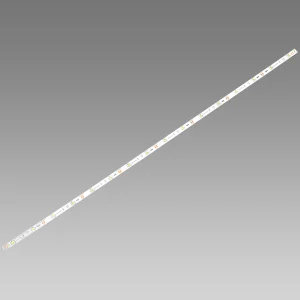 HUB Series Diffused LED Modules
207LM/W Diffuse 12V Rigid Light Strip 1130mm
-
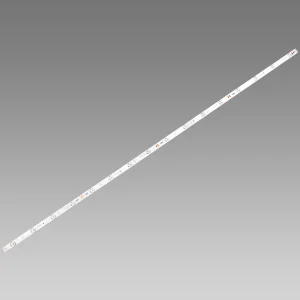 HUB Series Diffused LED Modules
207LM/W Diffuse 24V Rigid Light Strip 1130mm
Engineering diffuse LED modules for optical precision and thermal stability.
Building truly high-performance diffuse LED modules requires more than just efficient LEDs or high-quality PCB materials. Achieving hotspot-free lighting, wide beam distribution, and high optical efficiency requires integrating optical lens engineering, thermal path optimization, precision assembly, and rigorous verification testing. Higntek combines engineering-driven design with controlled manufacturing processes to deliver diffuse LED modules optimized for uniform lighting performance, long-term stability, and production scalability.
Optical Diffusion Engineering
We engineer lens structures, diffuser materials, and LED spacing to maximize beam uniformity while minimizing visible hotspots. Our optical design process balances diffusion efficiency, beam angle, and luminous output for signage and backlighting applications.
Thermal Path Optimization
We utilize an aluminum substrate and thermally optimized PCB layout, focusing on voltage stability, current balance, and energy efficiency. This reduces thermal resistance and electrical losses, ensuring consistent lumen output and extending module lifespan during continuous operation.
Automated Manufacturing Consistency
Automated SMT assembly, solder inspection, and controlled production parameters ensure repeatable quality, reduced defect rates, and stable optical consistency from prototyping to mass production.
Optical & Reliability Validation
Each module undergoes AOI inspection, X-ray inspection, optical performance measurement, electrical and aging tests. Beam angle, brightness consistency, color uniformity, and long-term operational reliability are verified before delivery.
Technical Capability & Qualification Benchmarks for Custom High Efficiency Diffused LED Modules.
| Capability Item | Higntek Engineering Specification |
|---|---|
| Luminous Efficiency | Up to 265 lm/W |
| Optical Utilization Efficiency | Up to 92% |
| Beam Angle Range | 120°–175° customizable |
| Illumination Uniformity | >90% |
| Hotspot Reduction Efficiency | Up to 85% reduction |
| Color Consistency | ≤3 SDCM |
| CRI Options | 80 / 90 / 95+ |
| CCT Range | 2700K–6500K customizable |
| LED Pitch Optimization | customized by application |
| Diffuser Lens Type | PMMA / PC / custom optical lens |
| Lens Transmittance | Up to 93% |
| PCB Material Options | FR4 / Aluminum / Copper base |
| Thermal Resistance Reduction | 15–25% optimized |
| Operating Voltage | DC12V / 24V / custom |
| Power Efficiency | 90–95% |
| Current Stability Tolerance | ±3% |
| Working Temperature | -20°C to 85°C |
| IP Rating Options | IP20 / IP65 / IP67 |
| Lifetime Expectancy | 50,000–70,000 hrs |
| Aging Test | 100% aging before shipment |
| Optical Testing | Integrating sphere + goniophotometer |
| Reliability Testing | high-temp / humidity / thermal cycling |
| MOQ Flexibility | prototype to mass production |
| Production Capability | OEM / ODM / custom engineering |
| Certification Compliance | CE / RoHS / UL available |
.webp)
.webp)



Applications Powered by High Efficiency Diffused LED Modules
Designed for projects requiring uniform illumination, wide beam coverage, and efficient light utilization, our diffused LED modules are widely used across display, signage, and architectural lighting applications.
Light Box Lighting
Signage & Light Box Lighting
Channel Letter & Advertising Displays
Channel Letter & Advertising Displays
Retail Display & Shelf Lighting
Retail Display & Shelf Lighting
Architectural Decorative Lighting
Architectural Decorative Lighting
One-stop professional engineering-customized LED module supplier. Reduce the risk of development failures and get to market faster.
Comprehensive One-Stop Service
From requirement concept, light source selection, solution design, sample production, component procurement/PCB manufacturing, LED PCBA packaging, soldering, functional testing, LED module assembly to delivery, we provide complete prototyping and mass production services. Shorten development time and ensure stable and rapid delivery.

Advanced Manufacturing Equipment
We have an advanced fully automated production line equipped with 25 Samsung SMT placement machines, and possess in-house AOI, X-ray inspection, and testing capabilities. From production and assembly to testing, we ensure high-precision, consistent, and reliable LED module manufacturing for demanding lighting applications.
Traceable Quality Control System
From raw materials to final testing, every process is traceable. Production processes are certified to ISO 9001 and ISO 13485 quality management systems, ensuring consistent performance and complete quality traceability. A 5+95 prototype service validates designs and materials before mass production, reducing risk.
Stable & Scalable Supply Chain
We collaborate with thousands of suppliers worldwide, including renowned LED brands, optical lenses, and drivers. Leveraging our established component sourcing network, we offer complete BOMs, replacement component recommendations, and bill of materials cost optimization solutions. Ensure stable materials, high cost-effectiveness, and timely delivery for both prototyping and mass production of LED modules.
Experienced Engineering Team
HIGNTEK assigns a dedicated account manager to each client. Each project is supported by a team of experienced engineers and technical experts. We provide systematic engineering solutions in areas such as thermal management, optical design, and PCB layout to help customers optimize performance and manufacture high-performance LED modules suitable for specific applications.
Meets global standards
We incorporate international certifications (CE, RoHS, and UL, etc.) and our clients’ local standards from the design stage, making compliance a core aspect of product development. This ensures that the quality and manufacturing technology of our LED modules meet international market safety and reliability standards, helping customers successfully complete product certification and enter the application market.
What Is a Diffused LED Module?
A diffused LED module is a pre-assembled LED lighting unit that adds optical materials (lenses or diffusers) to a standard LED module. This softens glare and eliminates reflected light spots, providing a soft, uniform halo effect. This type of LED module alters the LED’s output path by incorporating optical lenses, frosted covers, or specially designed light guide plates. It can produce wide-angle, uniform illumination from the light emitted by LED chips, making it ideal for signage, backlighting, and decorative applications.
- Uniform Illumination: Diffuse LED modules diffuse light evenly, reducing contrast and glare.
- Reduced Spots: The diffuser layer shields each LED diode, creating a spotless, “neon-like” appearance.
- Wide Beam Angle: Typically, special packaging processes (such as adding diffusing agents) or lenses can achieve ultra-wide beam angles of 120°–170°, covering a larger surface area. The spacing between LEDs can be increased in the early design stages to reduce the number of chips.
- Enhanced Color Mixing: For RGB full-color LED modules, diffusion improves color mixing and prevents color separation at close range.
Based on our experience with signage and backlighting projects, uneven lighting is one of the most common problems our clients encounter. I’ve seen many projects where even with “high-brightness” LEDs, the visual effect is still poor—because brightness alone doesn’t guarantee uniform lighting. A good diffusion module doesn’t simply increase light intensity, but rather manages light more intelligently.
| Feature | Standard LED Module | Diffused LED Module |
|---|---|---|
| Beam spread | Narrow to medium | Wide |
| Hotspot risk | Higher | Lower |
| Light uniformity | Moderate | High |
| Best for shallow boxes | Limited | Excellent |
| Visual smoothness | Basic | Premium |
What Types of Lighting Can Diffuse LED Modules be Used In?
Not all lighting projects require diffuse LED modules. In fact, using diffuse LED modules in inappropriate applications only increases costs without improving visual appeal.
All best-practice use cases share a common requirement: the final illuminated surface must appear smooth, soft, and visually continuous. Based on our experience, diffuse lighting is more important than primary illumination when a lighting project has the following limitations and requirements:
Limited installation depth / Requirement for extensive lighting coverage / Visible front surface.
- Signage Lighting: The most mature application of diffuse LED modules is signage. Commonly used for storefront signs, illuminated logos, advertising panels, fascia signage, and indoor branding walls. When the signage depth is less than 120 mm, the optical mixing space becomes limited, necessitating the consideration of diffuse LED modules.
- Light Boxes: In our internal project reviews, we frequently find that a good wide-angle diffuse module can increase the actual LED spacing by 15-30%, depending on the cabinet depth and panel material. This means fewer modules can achieve a more uniform and widespread luminous effect. Using diffused LED modules in light boxes offers the most significant return on investment.
- Illuminated 3D Letters: Diffuse LED modules can soften the light beam before it reaches the acrylic panel of the illuminated letter. This avoids inconsistent brightness and overly bright corners when viewed up close.
- Retail Display Lighting: In display scenarios such as cosmetic counters and jewelry displays, diffused LED modules create a soft backlighting effect that clearly highlights the products. It avoids the reflection noise caused by localized strong light.
- Decorative Backlighting: Diffuse modules are also suitable for decorative lighting and enhancing architectural features. The smooth, sophisticated, and calming light itself is part of the visual design.
| Depth | Recommended Module Type | Main Risk |
|---|---|---|
| >150 mm | Standard or diffused | Cost optimization |
| 80–150 mm | Diffused preferred | Minor hotspot risk |
| <80 mm | Wide-angle diffused strongly recommended | Severe hotspot risk |
From a purchasing perspective, I recommend asking a simple question before selecting LED modules: “Is my real problem insufficient brightness or insufficient uniformity?” If the lighting project involves shallow depth, visible surfaces, or sophisticated display requirements, diffused LED modules are generally more suitable than simply increasing brightness.
Why Beam Angle Matters in Diffused LED Lighting Applications?
Previously, when customers first consulted us about diffused LED modules, they typically focused on brightness, power, or the number of LEDs. However, after years of experience in signage, linear lighting, backlight panels, and architectural light boxes, our engineers now guide customers to focus on the beam angle.
A backlight LED module may use high-quality LEDs, a stable PCB design, and good power efficiency, but if the beam angle doesn’t match the depth of the illumination cavity or the application distance, light spots can still appear.
The beam angle controls how light diffuses. A narrower beam angle, such as 60° or 90°, concentrates more light forward. This usually increases center brightness but also makes individual LEDs more clearly visible. This often results in phenomena that contradict diffuse reflection: bright spots and uneven areas. In contrast, a wider beam angle (e.g., 120°, 150°, or even 170°) can spread the light across a larger surface immediately after it is emitted. This wider distribution helps adjacent LEDs overlap more quickly, resulting in more uniform brightness across the diffuser surface.
| Recommended Beam Angle by Application | ||
|---|---|---|
| Application | Typical Depth | Recommended Beam Angle |
| Channel Letter Lighting | 30–80 mm | 140°–170° |
| Slim Light Box | 20–50 mm | 160°–170° |
| Cabinet / Shelf Lighting | 30–60 mm | 120°–160° |
| Linear Diffused Fixtures | 40–100 mm | 120°–150° |
| Decorative Accent Lighting | 80mm+ | 60°–120° |
*This is not a universal rule and is for reference only. Specific adjustments need to be made based on the actual project design.
How do Diffused LED Modules Reduce Hotspots?
If light doesn’t mix sufficiently before reaching a visible surface, it easily creates glare spots. While diffused LED modules rely heavily on optical components (lenses or diffusers) to address this, this is insufficient. In professional custom diffused LED projects, reducing glare requires a well-designed module layout, LED spacing, wide beam angle, and optical control.
- Wide Beam Angle Design: We’ve already discussed the importance of beam angle in diffused LEDs. A wide-angle design allows for faster light mixing within a shallow cavity.
- Optimized LED Spacing: When LED spacing is too large, each light source forms its own visible light island. The light appears as repeating circles rather than a continuous surface. The initial design and development of diffused LED modules requires considering factors such as beam angle, cavity depth, diffuser refractive index, and target brightness when planning the spacing.
- Optical Control: Diffuse LED modules rely heavily on optical elements and lens assemblies to achieve the scattering effect. Optical engineering can redistribute the direction of light, allowing adjacent light fields to overlap earlier.
Problem Common Cause Better Solution Visible LED dots Narrow beam angle Use 150°–170° module Bright center zones Excessive LED intensity concentration Add diffusion optics Uneven brightness stripes Poor LED spacing Recalculate pitch/layout Hotspots in slim light box Insufficient mixing distance Wider beam + optical redesign
While diffusion engineering reduces LED brightness, it makes the light appear cleaner and smoother. In commercial lighting, a smooth lighting effect conveys an impression of reliable product quality. Choosing a diffused LED module should not be viewed simply as a brightness selection, but rather as a decision regarding the entire optical system.
When Higntek receives a request for diffused LED modules, it first discusses some practical issues with the client to begin engineering planning:
- What is the depth of the luminaire cavity?
- What type of diffusion material should be used?
- What are the beam angle requirements?
Once these necessary directions are clarified, it is easier to develop a suitable diffused LED module and avoid costly trial and error. Diffuse LED modules designed with systematic optical engineering look more refined and professional, helping lighting products gain greater market favor.
Which is better for backlighting: diffused or standard LED modules?
For most backlighting projects, diffused LED modules usually perform better because they spread light more evenly and reduce visible hotspots. Standard modules can work, but they often need deeper installation space or tighter LED spacing. If your product uses slim light boxes, signage, or shallow cabinets, I usually recommend diffused modules for cleaner visual results and lower rework risk.
What beam angle do your diffused LED modules support?
Our diffused LED modules typically support 120° to 175° wide beam angles, depending on module design and optical configuration. This wide distribution helps light overlap faster, which is especially useful in shallow installations where uniformity matters. In my experience, wider beam angles often solve hotspot issues more effectively than simply adding more LEDs.
Can you customize diffused LED modules for specific projects?
Yes, we do. We customize diffused LED modules based on your project needs, including LED PCB design, beam angle optimization, LED spacing, and module layout. Every lighting project has different depth, brightness, and uniformity targets, so I prefer adjusting the optical structure early rather than forcing customers to solve problems during installation.
What is the typical lifespan of your diffused LED modules?
Under standard operating conditions, our diffused LED modules are designed for a lifespan of 50,000+ hours. Actual lifetime depends on heat management, driver quality, and operating environment. From an engineering perspective, stable thermal design matters just as much as LED chip quality if you want long-term lumen maintenance and reliable field performance.
When Should Diffuse LED Modules Not Be Used?
Not all projects benefit from diffused lighting. I generally do not recommend using diffused LED modules in applications such as floodlighting, high bay lighting, directional work lighting, and applications where beam focusing is critical. In these cases, diffusion may only reduce optical efficiency.
What certifications do your Diffused LED modules comply with?
Depending on project requirements, our diffuse LED modules can meet international standards such as CE, ISO, RoHS, and UL. We can apply for and obtain corresponding certifications according to customer market requirements if necessary.
Do you support OEM and ODM manufacturing?
Yes. Higntek provides full OEM and ODM manufacturing services, from concept development and prototyping to mass production. We support customers who need more than standard catalog modules. If your team needs custom PCB layout, optical tuning, or complete module development, we can help turn early ideas into scalable production-ready solutions.
How can I work on a project with Hignetek?
You can send us your design files or requirements. Our engineering team will provide technical assessment, communication guidance, and a quotation. Once cooperation is confirmed, we will arrange for component procurement, manufacturing, inspection and testing, packaging, and shipping.
Do you accept small-batch orders or only large-scale production?
We support prototyping and small-batch orders to facilitate low-cost testing for our customers. We also support large-scale production and maintain consistent quality control.
How quickly can I get samples or quotations?
We usually provide quotations within 24 hours after receiving project details. Sample or prototype lead time depends on customization complexity, material availability, and testing requirements. For faster evaluation, I always suggest sharing application drawings, target dimensions, or lighting requirements early so we can recommend the right module faster.
How do you ensure quality consistency in large orders?
We ensure quality consistency in large-batch orders through the following methods: raw material inspection upon arrival, die bonding/dispensing/wire bonding inspection during production, AOI/X-ray/functional testing, aging testing, and traceability management.
What is your typical lead time for prototype and mass production?
Prototypes are typically delivered within 5-7 days. The mass production cycle for standard LED modules is approximately 10-15 days. Specific lead times will vary depending on quantity, specifications, and degree of customization. We typically assess technical parameters and inventory status comprehensively to recommend suitable solutions for our clients.
Other high-efficiency LED module series
We‘d Like to Hear From You
Looking for a reliable diffused LED module manufacturer with advanced optical engineering and scalable production capabilities? Higntek supports custom development from concept validation to mass production.
