
HUS Series Flexible LED Strips
Low-Voltage, High-Lumen Flexible LED Strip Solutions with Optimized Thermal Management and Energy Efficiency
Flexible LED strips have become the preferred solution for auxiliary decorative lighting in applications such as architecture, retail, display, signage, and interior decoration. In these fields, installation flexibility and lighting performance are equally important. However, the efficiency, thermal stability, or lifespan of many traditional LED strips are affected by continuous operation or complex installation environments.
Higntek’s high-efficiency flexible LED strip modules perfectly combine superior luminous performance with optimized thermal management and low power consumption. With advanced circuit design, carefully matched LED chips, and precision flexible PCB manufacturing processes, our solutions achieve bright, uniform, energy-efficient, and long-term reliable operation without compromising installation flexibility.
Whether you need custom lengths, specific color temperatures, high-density layouts, or electrical configurations specific to your lighting project, our engineering and manufacturing teams can provide full support from design verification to mass production.
Developing low-voltage, high-efficiency flexible LED strips.
We integrate LED selection, circuit optimization, thermal design, and precision manufacturing to create flexible LED strips with efficient thermal management through low-voltage engineering solutions. This helps customers reduce energy consumption, improve lighting stability, and extend product lifespan, while maintaining the installation flexibility required for flexible lighting applications.
- Luminous Efficacy: Up to 230 lm/W, enabling lower energy consumption for Flexible Lighting.
- Low-Voltage Energy Saving: 4–8W/m low-voltage design ensures safe operation and reduces heat generation.
- Thermal Management: 15-25% lower operating temperature, optimized heat dissipation path for improved reliability.
- Color consistency: SDCM ≤ 3, lighting effects remain smooth and uniform.
- Flexibility: Minimum bending radius of 10–20 mm, stable brightness at bends.
- Easy Installation: Customizable lengths and cuttable designs.
- Lifespan: Over 50,000 hours of lifespan with low maintenance requirements.
Product
Filter
Need customization?
Contact us anytime for professional engineering assistance. Communicate with engineers to discuss your lighting project specifications and develop your customized LED module solution.
-
-300x300.webp) HUS Series Flexible LED Strips
HUS Series Flexible LED Strips204LM/W 12V Flexible LED Strip Light with 80 LEDs
-
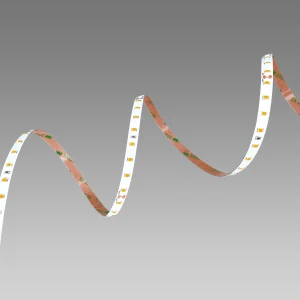 HUS Series Flexible LED Strips
204LM/W 24V Flexible LED Strip Light with 80 LEDs
-
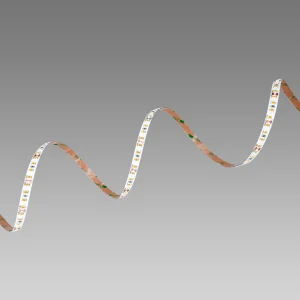 HUS Series Flexible LED Strips
200LM/W 12V Flexible LED Strip Light with 128 LEDs
-
HUS Series Flexible LED Strips
200LM/W 24V Flexible LED Strip Light with 128 LEDs
Flexible LED strip design and manufacturing capabilities.
From flexible PCB design and thermal optimization to precision assembly and reliability testing, Higintek’s end-to-end development capabilities strike a balance between lumen performance, energy efficiency, installation flexibility, and long-term durability. This helps customers transform application needs into scalable, mass-producible lighting solutions.
Flexible Design
Our engineering team develops optimized FPC layouts, copper structures, and circuit architectures that maintain electrical stability while allowing for smaller bending radii and custom shapes. This enables successful installation on curved surfaces and in confined spaces.
Low-Voltage Energy Saving
Through optimized current distribution, segmented circuit architecture, and precise component selection, we prevent voltage drops in LED strips over long distances. This also maintains uniform illumination along the entire strip length. This helps customers achieve higher luminous efficiency with lower power consumption.
Thermal Optimization
Our thermal management encompasses PCB material selection, copper foil optimization, LED spacing analysis, and thermal path design, designed to reduce operating temperatures and improve heat dissipation efficiency. This results in higher luminous flux maintenance, better reliability, and longer lifespan.
Customizable
We support customization of LED strip length, cut spacing, PCB width, LED density, connector options, and mounting methods. This allows OEM and ODM customers to simplify product integration while reducing assembly complexity and installation costs.
Precision Manufacturing
Our automated SMT production lines, optical inspection systems, and process control protocols ensure accurate LED placement, stable solder joints, and repeatable electrical performance from prototype batches to large-scale production.
Reliability Verification
Each flexible LED strip module undergoes comprehensive AOI inspection, X-ray inspection, optical performance measurement, electrical testing, and aging testing. Ensure the product meets lumen output, color consistency, thermal performance, and long-term operational reliability before shipment.
Technical Capability & Qualification Benchmarks for Custom High Efficiency Flexible LED Strip.
| Capability Item | Higntek Advanced Flexible LED Strip Capability |
|---|---|
| Luminous Efficacy | Up to 180–230 lm/W |
| System Efficiency | Up to 92–95% |
| LED Package Options | 2835 / 3030 / 3535 / 5050 / Custom |
| CRI Options | CRI 80 / 90 / 95 / 98+ |
| R9 Value | Up to R9 > 95 |
| Color Consistency | ≤ 2–3 SDCM |
| CCT Range | 1800K – 6500K |
| Tunable White Range | 1800K – 6500K |
| RGBW Capability | Supported |
| Flexible PCB Width | 3mm – 20mm / Custom |
| Copper Thickness | 1oz – 4oz |
| Input Voltage | 5V / 12V / 24V / 36V / 48V DC |
| Maximum Continuous Run | Up to 20m without visible brightness variation* |
| Voltage Drop Optimization | <5% over specified design length |
| LED Density | 30 LEDs/m, 60 LEDs/m, 120 LEDs/m, 240 LEDs/m, Custom. |
| Power | 4/5/6/8/10 W/m., Custom. |
| Minimum Cutting Pitch | As low as 8.33mm / Custom. |
| Minimum Bending Radius | 10-20mm |
| Thermal Resistance Reduction | Up to 25% lower than conventional layouts |
| Operating Temperature | -40°C to +85°C |
| L70 Lifetime | >60,000 hours |
| L90 Lifetime | >36,000 hours |
| Moisture Protection | IP20 / IP54 / IP65 / IP67 / IP68 |
| PCB Material | High-conductivity FPC |
| Optical Uniformity | No visible hotspot designs available |
| Flicker Performance | Flicker-Free Solutions Available |
| Dimming Compatibility | PWM / 0-10V / DALI / TRIAC Compatible |
| Custom Length Production | Supported |
| OEM Branding | Supported |
| ODM Development | Supported |
| Engineering Validation Samples | Supported |
| SMT Placement Accuracy | ±0.05 mm |
| AOI Inspection Coverage | 100% |
| Burn-In Testing | Available |
| LM-80 Based LED Selection | Supported |
| RoHS Compliance | Standard |
| CE Compliance | Standard |
| UL-Compatible Designs | Available upon request |
.webp)
.webp)



Flexible LED Strip Solutions for Diverse Lighting Applications
Our LED strip modules are designed for high efficiency, flexibility, custom lengths, and cuttable designs, with excellent thermal stability. They support a wide range of commercial, architectural, display, and custom decorative lighting applications.
Architectural Decoration
Architectural Decoration
Retail and Display
Retail and Display
Furniture and Interior Lighting
Furniture and Interior Lighting
Signage and Lightbox Lighting
Signage and Lightbox Lighting
One-stop professional engineering-customized LED module supplier. Reduce the risk of development failures and get to market faster.
Comprehensive One-Stop Service
From requirement concept, light source selection, solution design, sample production, component procurement/PCB manufacturing, LED PCBA packaging, soldering, functional testing, LED module assembly to delivery, we provide complete prototyping and mass production services. Shorten development time and ensure stable and rapid delivery.

Advanced Manufacturing Equipment
We have an advanced fully automated production line equipped with 25 Samsung SMT placement machines, and possess in-house AOI, X-ray inspection, and testing capabilities. From production and assembly to testing, we ensure high-precision, consistent, and reliable LED module manufacturing for demanding lighting applications.
Traceable Quality Control System
From raw materials to final testing, every process is traceable. Production processes are certified to ISO 9001 and ISO 13485 quality management systems, ensuring consistent performance and complete quality traceability. A 5+95 prototype service validates designs and materials before mass production, reducing risk.
Stable & Scalable Supply Chain
We collaborate with thousands of suppliers worldwide, including renowned LED brands, optical lenses, and drivers. Leveraging our established component sourcing network, we offer complete BOMs, replacement component recommendations, and bill of materials cost optimization solutions. Ensure stable materials, high cost-effectiveness, and timely delivery for both prototyping and mass production of LED modules.
Experienced Engineering Team
HIGNTEK assigns a dedicated account manager to each client. Each project is supported by a team of experienced engineers and technical experts. We provide systematic engineering solutions in areas such as thermal management, optical design, and PCB layout to help customers optimize performance and manufacture high-performance LED modules suitable for specific applications.
Meets global standards
We incorporate international certifications (CE, RoHS, and UL, etc.) and our clients’ local standards from the design stage, making compliance a core aspect of product development. This ensures that the quality and manufacturing technology of our LED modules meet international market safety and reliability standards, helping customers successfully complete product certification and enter the application market.
How to Choose the Right Flexible LED Strip for Your Project?
After participating in hundreds of custom flexible LED light strip projects, I’ve found that most buyers focus solely on the LED strip itself, neglecting to clearly define application requirements, which easily leads to selection errors. In reality, choosing the right flexible LED light strip requires considering six key factors: installation environment, voltage, brightness, color functionality, physical dimensions, and heat dissipation. For custom flexible LED light strip projects, correctly defining these factors from the outset makes product development much smoother. Otherwise, even expensive LED strips may fail to meet project expectations.
Usage Environment.
The first thing to decide is where the flexible LED light strip will be operated. This sounds obvious, but we’ve seen many projects overspend on waterproofing or underestimate environmental exposure, leading to premature failures of the flexible LED strips.
| Installation Environment | Recommended IP Rating |
|---|---|
| Dry indoor applications | IP20 |
| Kitchens, bathrooms, damp areas | IP64/IP65 |
| Outdoor architectural lighting | IP65/IP67 |
| Marine, fountain, underwater applications | IP68 |
In large-scale applications, the IP protection rating should match the actual installation conditions, rather than simply choosing the highest rating, creating unnecessary additional costs. For example, an IP68 strip installed under retail shelves offers no real advantage over an IP20 strip, but is more expensive, has lower heat dissipation efficiency, and may reduce installation flexibility. On the other hand, the use of IP20 LED strips in outdoor awning projects is one of the most common causes of premature LED strip failure.
Voltage.
Many customers ask whether 12V or 24V is “better.” However, from a professional perspective, the running distance of the flexible LED light strip and the number of power injection points required need to be considered. For the same power level, a 24V strip draws roughly half the current of a 12V strip. Lower current means less voltage drop, fewer injection points, and more uniform brightness over longer distances.
| Voltage | Typical Applications |
|---|---|
| 5V | USB products, interior lighting for computer cases, camping tent lighting, and supplemental lighting for night market stalls |
| 12V | Short runs, furniture lighting, displays |
| 24V | Architectural, commercial, and long-run installations |
| 36V / 48V | High-efficiency architectural and large-scale projects |
The voltage selection for flexible LED modules should be based on system layout, not personal preference. I share a practical principle for a quick initial assessment:
- Within 5 meters, both 12V and 24V can operate normally.
- Above 5 meters, 24V is generally the safer engineering choice.
- Above 10 meters, regardless of voltage, power injection planning becomes crucial.
A common misconception is that 24V systems are more energy-efficient. In reality, energy consumption primarily depends on power (watts). The real advantage of 24V lies in its smaller voltage drop and simpler system design.
Brightness Requirements.
The brightness of flexible LED light strips is also measured in lumens. Currently, the brightness of LED light strips is generally between 300-1000 lumens/m, with some high-brightness applications reaching 1500 lumens/m.
| Lighting Purpose | Typical Brightness Range |
|---|---|
| Decorative Accent Lighting | 300–800 lm/m |
| Cove Lighting | 800–1500 lm/m |
| Task Lighting | 1500–2500 lm/m |
| Commercial & Architectural Lighting | 2500+ lm/m |
The required lumen output for actual lighting determines the selection of LED chips and LED density. Commonly used LED chip models for flexible LED light strips include 2835, 3030, and 5050. Common chip density layouts are 30 LEDs/meter, 60 LEDs/meter, 120 LEDs/meter, and 240 LEDs/meter. Many buyers believe that the more LEDs per meter, the brighter the light strip. This is not always the case. A 240-LED/m light strip using low-output LEDs may produce less light than a 120-LED/m light strip using high-efficiency LEDs. LED density directly affects light uniformity. In our experience, it is more useful to assess energy efficiency and cost budget before determining the appropriate LED density.
Color Functionality.
Our flexible LED strips offer a variety of options: monochrome/tunable white light/RGB/RGBW/RGBCCT/RGBIC. This allows for completely different user experiences depending on the control architecture.
| Function | Typical Application |
|---|---|
| Single Color | Signage, task lighting |
| Tunable White (CCT) | Offices, hospitality |
| RGB | Decorative lighting |
| RGBW | Entertainment, architectural lighting |
| RGBCCT | Smart lighting systems |
| RGBIC | Dynamic pixel-controlled effects |
While RGBIC or advanced digital flexible strips offer more diverse visual effects, they also increase control system complexity, installation costs, and troubleshooting requires additional expertise. Therefore, the color functionality of flexible LED strips needs to balance necessity, cost, and installation expertise.
Physical Dimensions.
Incorrect dimensions for flexible LED strips can be fatal. To avoid redesign costs, always confirm the mounting channel width, aluminum profile dimensions, bending radius requirements, and maximum continuous run length before finalizing any flexible LED strip specifications. We have encountered projects where the required bending radius was less than the range that the selected PCB structure could withstand.
When evaluating a new project, our engineering team typically considers these questions in the following order:
- The scene where this light strip will be installed.
- The actual IP protection level required.
- The required brightness?
- What voltage will minimize voltage drop and wiring complexity?
- What color features are needed?
- Are there any limitations in terms of width, profile, or curvature?
- Thermal management.
Once these questions are answered during communication with the client, the engineering customization of the product becomes more precise. The goal is not to choose the highest power LED light strip or the most advanced feature-rich product, but rather to select a lighting solution that offers reliable performance, efficient installation, and the lowest total project cost over its entire lifecycle.
What Determines the Efficiency of a Flexible LED Strip?
The efficiency (lm/W) of flexible LED light strips, like that of standard rigid LED modules, is the result of a combination of numerous engineering decisions. The efficiency of an LED strip is rarely determined by a single factor. It is the result of a comprehensive trade-off between LED performance, light output, electrical design, heat dissipation, and driver power supply.
LED is Foundation.
The LED package itself has the greatest impact on the overall luminous efficacy of the strip. Today, high-quality medium-power LEDs can achieve luminous efficacy exceeding 270 lm/W under laboratory testing conditions. However, actual LED module performance is usually lower than this because LEDs operate within a complete lighting module, not just in a test environment. We have observed a common misconception: some buyers compare flexible LED strip products solely based on the LED brand. In reality, even using the same LED package, the luminous efficacy of two flexible LED strips can differ significantly due to differences in drive current, heat dissipation design, and PCB layout.
This is why we place particular emphasis on system engineering design when receiving custom requests. For high-efficiency LED projects, our engineering team typically focuses on the following aspects: LED luminous efficacy at the target operating current, luminous flux maintenance, thermal resistance characteristics, grade consistency, and long-term reliability.
LED density and efficiency are not the same concept.
One question we are often asked is: “Does increasing LED density improve efficiency?” The answer is not always yes. Higher LED density in flexible LED strips typically improves light uniformity and overall brightness, but it does not automatically increase luminous efficacy per watt.
Without proper electrical design, excessively high LED density can even reduce overall efficiency by increasing total heat generation and power consumption. One design principle we often adopt is to use the minimum LED density required to achieve the desired lighting effect. This approach reduces system power consumption while maintaining visual quality. For architectural and commercial lighting projects, balancing efficiency and uniformity generally leads to a more stable and longer lifespan than simply maximizing the number of LEDs.
| Design Factor | Impact on Efficiency |
|---|---|
| Higher efficacy LED chips | Significant improvement |
| Optimized LED density | Moderate improvement |
| Excessive LED density | Potential efficiency loss |
| Improved optical uniformity | Better visual performance, not necessarily higher efficacy |
Thermal Management.
Thermal management has always been key to maintaining stability and improving efficiency in lighting modules, and this is also true for flexible LED light strips. The higher the junction temperature of an LED, the lower its efficiency. Even if the strip is still operating, higher temperatures will reduce light output and accelerate light decay. According to USA Nih test data, when the junction temperature is significantly higher than recommended operating conditions, LED efficiency can decrease by 10% or more.
In our own testing, we frequently observed that the same LED strip mounted on different surfaces exhibited significantly different operating temperatures.
| Installation Surface | Relative Thermal Performance |
|---|---|
| Aluminum profile | Excellent |
| Extruded heat sink | Excellent |
| Steel structure | Good |
| Wood surface | Limited |
| Plastic enclosure | Poor |
Proper use of aluminum channels and heat sinks is only an additional thermal management method; the most important aspect is sound system engineering development in terms of LED selection and electrical design. The goal is not only to extend lifespan but also to maintain luminous efficiency over the long term.
Circuit Design.
Every copper foil trace, resistor, connector, and solder joint contributes to electrical losses. Poor PCB layout can lead to unnecessary voltage drops, uneven current distribution, and localized overheating. Circuit optimization is especially crucial in the development of long-distance LED strips. This is why we must repeatedly review the design Gerber files when receiving client project orders. Some of the techniques we use in developing custom high-efficiency LED strips include:
- Wider copper traces.
- Optimized current paths.
- Reduced resistance design.
- Multiple power supply channels.
- Low-loss PCB architecture.
Taking all these seemingly insignificant details together can have a significant impact on the luminous efficacy and thermal control of the entire LED light strip.
Driver Efficiency.
Drivers must be able to efficiently convert AC mains power into stable DC power. Low-quality power supplies waste significant energy as heat before the power even reaches the flexible LED strip. Even if the flexible LED strip itself has excellent luminous efficiency, the quality of the driver power supply will significantly impact the efficiency of the entire lighting system. For commercial lighting projects operating for thousands of hours annually, this difference translates into substantial energy costs over the entire lifespan of the flexible LED strip.
Lowering the expected color rendering index (CRI) is advisable.
Higher CRI typically comes at the cost of luminous efficacy, a topic many suppliers avoid discussing. To produce a more complete spectrum, LEDs must sacrifice some luminous efficiency. Therefore, under the same conditions, a CRI 90 LED generally provides lower lumens per watt than its CRI 80 counterpart.
However, this doesn’t mean a lower CRI is always better. For retail, hospitality, museum, healthcare, and high-end residential lighting, a higher CRI is often sufficient to compensate for the reduced luminous efficacy, as visual quality is more important than maximizing lumen output. However, for warehouses, industrial facilities, parking lots, and many outdoor applications, choosing CRI 75 instead of CRI 90 can result in significant energy savings without compromising lighting requirements.
Higntek develops and manufactures high-efficiency flexible LED strips based on system-level optimization. We comprehensively evaluate LED chips, density, PCB architecture, thermal management, optical requirements, and driver performance, as actual efficiency is the result of the interaction of all these factors. For buyers seeking long-term energy savings, reduced operating costs, and reliable lighting performance, understanding these engineering fundamentals is often more valuable than comparing lumen values on a datasheet.
Flexible LED Strip vs Rigid LED Module: Which Is Better?
One of the most common questions we receive from lighting brands and OEM customers is: Is a flexible LED strip or a rigid LED module more suitable for a project? After years of developing both products, my answer is usually the same: There is no absolute superiority or inferiority. The right choice depends on the product’s installation method, heat dissipation method, maintenance method, and mass production method.
When choosing between flexible and rigid LEDs for actual lighting projects, one cannot simply look at the surface-level difference between them. When selecting lighting for a project, one cannot simply look at the surface-level difference between flexible and rigid LEDs. Decisions need to consider deeper underlying factors.
Flexible LED strips utilize bendable FPCB circuit boards, adapting to various curves, corners, and custom shapes, making them ideal for decorative lighting applications involving curved contours, narrow channels, and custom shapes. Rigid LED modules, on the other hand, use aluminum or FR4 circuit boards, offering higher mechanical strength and better heat dissipation, thus commonly used in continuous lighting, high-power luminaires, and other stable lighting applications requiring higher drive currents. Installing flexible LED strips simply involves cutting the strip to the desired length and connecting it to power, significantly reducing installation labor costs. Conversely, installing rigid LED modules involves more installation hardware (screws/brackets), wiring, and assembly steps.
Flexible LED strips typically rely on higher LED density to produce continuous light. Rigid LED modules, however, can use fewer LEDs and utilize auxiliary optical elements such as lenses or reflectors to precisely project light to the desired location. Both technologies achieve excellent lighting effects, but in different ways.
For most modern lighting projects, both types of LED modules have their own advantages and disadvantages. In our experience, many buyers initially compare these products based on brightness or price, but the real decision should focus on installation requirements, heat dissipation, maintenance expectations, and total project cost. Rigid LED modules offer better mechanical stability, better heat dissipation, and better vibration resistance. Flexible LED strips have fewer mechanical stress points, a simpler replacement process, and greater installation adaptability.
| Flexible LED Strip vs Rigid LED Module Comparison | ||
|---|---|---|
| Factor | Flexible LED Strip | Rigid LED Module |
| PCB Structure | Flexible FPCB | Aluminum PCB / FR4 |
| Shape Adaptability | Excellent | Limited |
| Curved Installations | Ideal | Not Suitable |
| Thermal Performance | Depends on mounting surface | Generally Better |
| Installation Speed | Fast | Moderate |
| Mechanical Strength | Moderate | High |
| High-Power Applications | Moderate to High | Excellent |
| Maintenance | Easy section replacement | Module replacement |
| Inventory Flexibility | High | Moderate |
| Initial Tooling Cost | Lower | Higher |
| Custom Shapes | Easy | More Complex |
Which Solution Should You Choose?
Based on our project experience, the selection process is usually straightforward once the application requirements are clearly defined.
Choose a Flexible LED Strip when:
- The installation involves curves or irregular shapes.
- Fast installation is important.
- Custom lengths are required.
- Weight reduction matters.
- Continuous light lines are desired.
- Product designs may change frequently.
Choose a Rigid LED Module when:
- Maximum thermal performance is required.
- High-power output is needed.
- The structure is fixed and repetitive.
- Mechanical durability is critical.
- Secondary optics are required.
For many modern lighting products, the decision is no longer strictly one or the other. Increasingly, we see hybrid solutions that combine rigid modules for high-power zones and flexible LED strips for accent or contour lighting. This approach often delivers the best balance between performance, installation efficiency, and overall project cost.
At Higntek, we typically start by analyzing the installation environment, thermal requirements, optical goals, and production volume before recommending a solution. In many cases, the most successful projects are not the ones using the most advanced technology, but the ones where the lighting architecture was matched correctly to the application from the beginning.
Key Factors Affecting LED Strip Lifespan and Reliability.
When evaluating flexible LED strips, we cannot focus solely on initial brightness, luminous efficacy, or price. Having participated in numerous commercial and architectural lighting projects, I have found that long-term reliability often has a greater impact on a project’s success than any specification listed in a data sheet. Most LED strips do not suddenly stop working. What we observe in real-world applications is a gradual decline in performance—including reduced brightness, color shifts, and adhesive failure. Based on our experience, the lifespan of flexible LED strips depends on several interrelated factors: thermal management, the driver, and materials.
The most critical of these is operating temperature. Overheating remains the primary cause of lumen depreciation and premature LED aging. Even high-quality LED packages will experience performance degradation if the junction temperature remains elevated for extended periods (>60°C). Therefore, thermal design must never be overlooked. Appropriate aluminum profiles, adequate ventilation, and reasonable power loading typically contribute more to long-term reliability than selecting more expensive LED chips.
The second factor is the drive current. A common mistake many people make is pushing the LED drive current close to its maximum rated current in order to achieve higher initial brightness. While this may increase luminous flux in the short term, it typically accelerates heat generation and leads to long-term performance degradation. For many commercial projects, slightly reducing the LED drive current can significantly improve luminous flux maintenance and overall service life, with only a negligible loss in visible brightness. I recommend that the total power consumption of the LED strip should not exceed 80% of the power supply’s maximum rated capacity. Voltage fluctuations, unstable drivers, and insufficient surge protection all place continuous stress on the LED strip. Be sure to use a power adapter that is of consistent quality and compatible with the system.
The quality of materials used in flexible LED strips—such as LED chips, flexible PCBs, solder, resistors, connectors, and adhesive backing—all impact reliability. In outdoor or high-humidity environments, we often see situations where the LEDs themselves continue to function normally, but the adhesive backing fails first, leading to maintenance issues before the lighting system reaches the end of its service life.
Environmental conditions are just as important as product specifications. If the protection rating does not match the installation environment, dust, moisture, chemicals, UV exposure, and vibration can all accelerate aging. As we mentioned earlier, selecting an IP68-rated strip for underwater applications is reasonable. However, choosing the same product for indoor retail displays typically increases costs without improving reliability.
From a manufacturing perspective, consistency is often the hidden difference between a strip that performs reliably for years and one that develops problems after a few months. LED binning control, soldering quality, thermal testing, and electrical inspection all affect long-term performance. Two products may look identical on day one, yet show very different lumen maintenance and color consistency after thousands of operating hours.
The table below summarizes the reliability factors we review most frequently during project evaluation.
| Reliability Factor | Common Failure Risk | Quality Control Recommendation |
|---|---|---|
| High Operating Temperature | Faster lumen depreciation and color shift | Use aluminum profiles and validate thermal performance |
| Excessive Drive Current | Accelerated LED aging | Operate below maximum rated current when possible |
| Poor Material Quality | Component and connection failures | Use verified LEDs, PCB materials, and adhesives |
| Unstable Power Supply | Flicker, premature failures, electrical stress | Select high-quality drivers and surge protection |
| Environmental Exposure | Moisture, corrosion, UV damage | Match IP rating to actual installation conditions |
| Manufacturing Variability | Inconsistent lifespan across batches | Implement electrical, thermal, and aging tests |
One lesson we’ve learned from real-world projects is that reliability is rarely determined by the most visible specification. Buyers often compare lumen output, wattage, or LED density because those numbers are easy to measure. Yet many field failures originate from less obvious issues such as poor thermal management, unstable power conditions, or inadequate manufacturing controls.
At Higntek, reliability engineering begins long before production starts. When developing high-efficiency flexible LED strip solutions, we evaluate thermal performance, drive conditions, material selection, and manufacturing consistency together because a truly efficient LED strip should not only deliver more light today—it should continue delivering stable performance years from now.
How do you manage heat dissipation in flexible LED strips?
Thermal management of flexible LED strips begins in the design phase. We optimize PCB copper foil thickness, LED spacing, circuit design, power, and material selection to reduce operating temperature. For high-power strips, we typically recommend using aluminum profiles or dedicated heat sinks. Based on our experience in real-world projects, controlling heat dissipation is one of the most effective ways to extend LED lifespan and maintain luminous flux output.
Can your LED strips be used in curved or irregular installations?
Absolutely. Flexible LED strips are specifically designed for applications where rigid lighting solutions cannot fit. We can help select the appropriate PCB structure and minimum bend radius based on your installation geometry. For complex architectural lighting projects, we often review drawings first to ensure reliable performance after installation.
What voltage options are available for your flexible LED strips?
We support standard 5V, 12V, and 24V platforms, along with custom 36V and 48V solutions for specialized applications. The right voltage depends on run length, power consumption, and system design.
Can you develop high-efficiency LED strips for energy-saving projects?
Yes. High-efficiency flexible LED strips are one of our core specialties. By combining premium LEDs, optimized circuit design, and effective thermal management, we can achieve higher lumen output with lower power consumption.
What IP ratings do your flexible LED strips support?
We offer solutions ranging from IP20 for indoor use to IP68 for outdoor and wet-location applications. Rather than recommending the highest protection level by default, we prefer matching the IP rating to the actual installation environment. This often improves performance while avoiding unnecessary project costs.
Can you provide custom CCT and color options?
Yes. We support single-color, tunable white, RGB, RGBW, RGBCCT, and other custom color configurations. If your project requires specific color temperature, color rendering index, or lighting effects, our engineering team can tailor a solution for you.
What information should I prepare before requesting a quotation?
The most helpful information includes installation environment, desired brightness, voltage, IP rating, color requirements, and estimated order volume. Even a simple drawing or project description can speed up development significantly. If you’re unsure about the specifications, our team can help define them during the evaluation stage.
Why choose Higntek as your flexible LED strip manufacturing partner?
Because we approach projects as engineers, not just manufacturers. Beyond production, we support LED selection, PCB design, thermal optimization, optical performance, and manufacturability review. Many customers come to us looking for a product, but what they actually need is a solution that works reliably in the real world.
Can you customize the length, voltage, and LED layout of flexible LED light strips?
Yes. We regularly customize strip length, PCB width, voltage, LED density, and circuit layout based on project requirements. In my experience, many lighting projects don’t fail because of LED quality—they fail because standard products don’t fit the application. That’s why we design around the project first, then optimize the strip specification for performance, efficiency, and installation.
How can I work on a project with Hignetek?
You can send us your design files or requirements. Our engineering team will provide technical assessment, communication guidance, and a quotation. Once cooperation is confirmed, we will arrange for component procurement, manufacturing, inspection and testing, packaging, and shipping.
Do you support low-volume prototyping before mass production?
Yes, we support prototyping before mass production, especially for custom designs. Small-batch pilot production helps verify brightness, thermal performance, electrical compatibility, and installation suitability.
Do you accept small-batch orders or only large-scale production?
We support prototyping and small-batch orders to facilitate low-cost testing for our customers. We also support large-scale production and maintain consistent quality control.
How quickly can I get samples or quotations?
We usually provide quotations within 24 hours after receiving project details. Sample or prototype lead time depends on customization complexity, material availability, and testing requirements. For faster evaluation, I always suggest sharing application drawings, target dimensions, or lighting requirements early so we can recommend the right module faster.
How do you ensure quality consistency in large orders?
We ensure quality consistency in large-batch orders through the following methods: raw material inspection upon arrival, die bonding/dispensing/wire bonding inspection during production, AOI/X-ray/functional testing, aging testing, and traceability management.
What is your typical lead time for prototype and mass production?
Prototypes are typically delivered within 5-7 days. The mass production cycle for standard LED modules is approximately 10-15 days. Specific lead times will vary depending on quantity, specifications, and degree of customization. We typically assess technical parameters and inventory status comprehensively to recommend suitable solutions for our clients.
Other high-efficiency LED module series
We‘d Like to Hear From You
Looking for a reliable High-efficiency flexible LED strips manufacturer with advanced optical engineering and scalable production capabilities? Higntek supports custom development from concept validation to mass production.