Location
Shanghai, China
Time
2024
Customer Type
Commercial light box manufacturer
Application Scenarios
Commercial Shopping Mall Advertising Light Boxes
Product
LED Diffused Backlighting Module
LED module solutions
High-efficiency LED backlight module
Project Background:
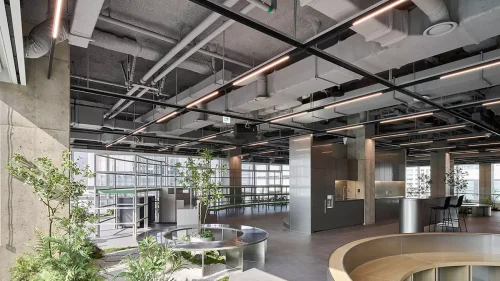
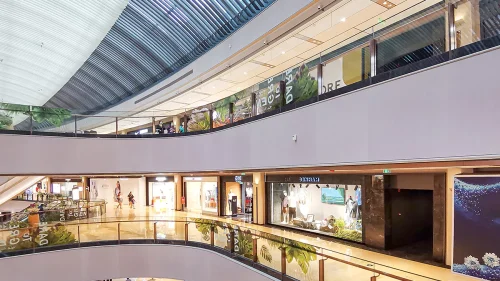
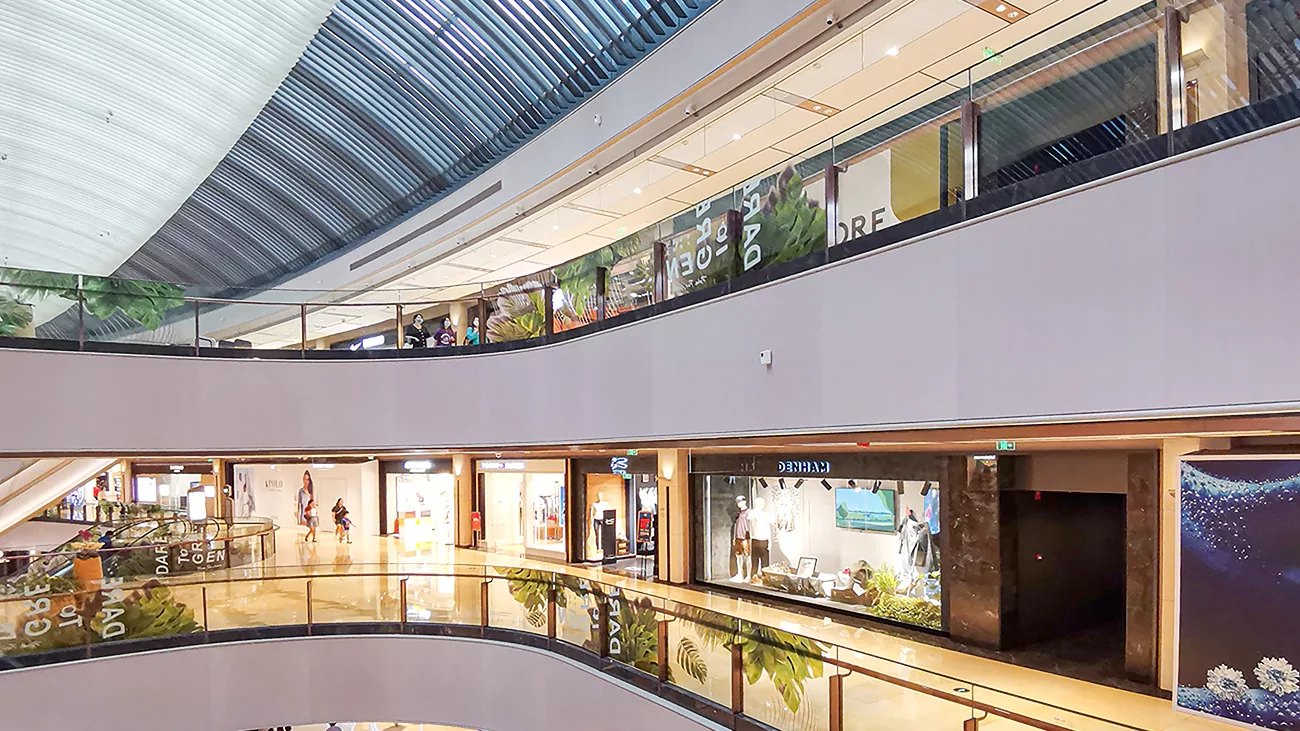
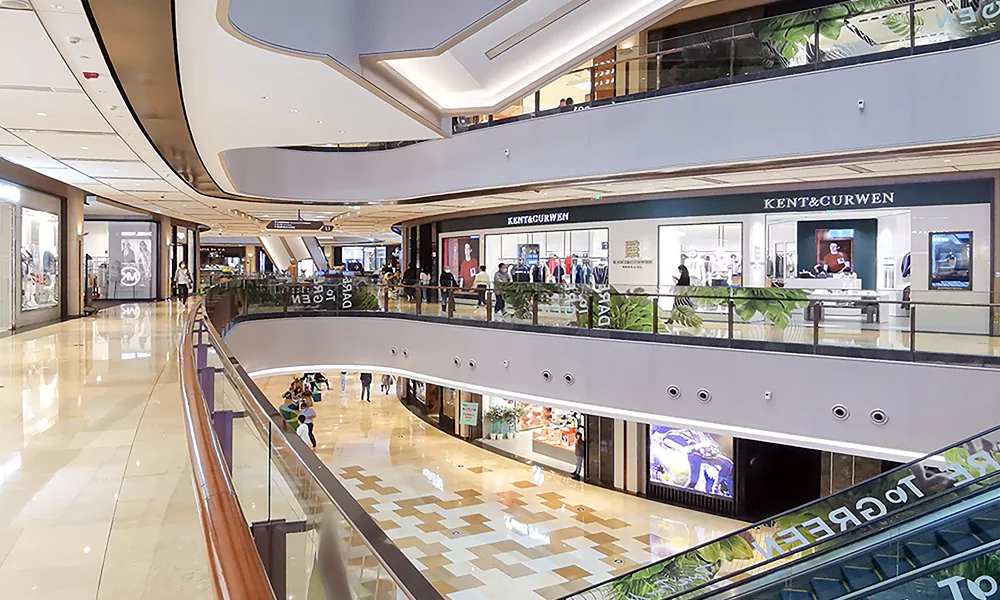
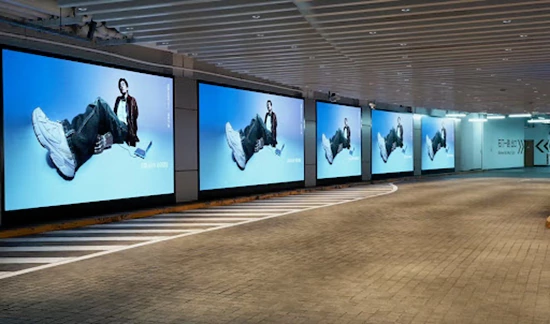
In 2024, Higintek participated in the LED backlighting project at HKRI Taikoo Hui in Shanghai, China, providing customized LED diffused light strip module solutions for commercial advertising light boxes installed in public areas and brand retail display spaces.
For commercial environments such as high-end shopping malls, advertising light boxes are not merely lighting products, but a crucial component of the entire spatial visual communication system. Their core objective is not simply to provide brightness, but to create a more visually appealing advertising image through uniform and continuous light. Backlight quality directly impacts customers’ perception of brand image, product display, and architectural aesthetics. In large shopping mall environments, light boxes typically need to:
- operate continuously for extended periods;
- maintain stable brightness;
- avoid noticeable bright spots;
- ensure consistent brand display effects.
Therefore, light box manufacturers focus not only on LED module parameters but also on the final presentation effect of the entire light box system. In this project, our client was a professional light box manufacturer responsible for providing customized display lighting solutions for commercial spaces. Their challenge lay not only in achieving sufficient brightness but also in creating a consistent and smooth luminous surface across different sizes and installation conditions. Previously, clients used traditional LED strip solutions for lightbox backlighting. However, as projects expanded, they found that standard strip solutions were insufficient for the needs of high-end commercial spaces.
Based on our experience with previous commercial backlighting projects, we understand that the biggest challenge is often not the output power of the LEDs themselves. The real engineering challenge lies in controlling the behavior of point light sources within the enclosed lightbox structure and transforming it into a uniform surface illumination effect.
Customer Needs:
Prior to working with Higntek, the client encountered several practical problems in previous projects. While existing LED modules theoretically provided sufficient brightness, the assembled lightboxes sometimes exhibited noticeable bright lines directly above the LEDs, dark areas between modules, and inconsistent lighting effects when applied to lightboxes of varying depths. The client’s primary requirement was to create a smooth, uniform lighting surface within advertising lightboxes of different sizes.
At the outset of project discussions, the client emphasized a key concern: no visible LED lines, no hot spots, and no dark areas.
This requirement sounds simple, but in practice, it is one of the most challenging issues in LED backlighting. LEDs are essentially point light sources. When multiple LEDs are arranged behind a diffuser, the final visual effect depends on many factors, including LED spacing, light distribution angle, and the mixing distance between the LED modules and the emitting surface. In our experience, many backlighting projects fail because engineers focus solely on LED brightness while neglecting optical mixing conditions. Brighter LEDs do not necessarily result in better lighting. Sometimes, excessive brightness can actually make uneven areas more noticeable. Click to learn more about our optical design engineering.
In addition to optical performance, the client also required the modules to support long-term operation. Commercial advertising light boxes are typically powered continuously throughout business hours, meaning thermal stability and efficiency directly impact maintenance costs.
The client also requested a modular design. Since commercial projects often include light boxes of various sizes, producing completely different LED boards for each size would increase inventory complexity and production costs. Therefore, our design goal wasn’t simply: “Make a high-brightness LED strip.” Instead, we needed to develop a scalable LED lighting module to adapt to different commercial light box structures.
| Requirement | Target |
|---|---|
| Lighting Effect | Uniform surface illumination |
| Optical Performance | No hotspot / no dark area |
| Efficiency | >185 lm/W |
| Brightness | >1500 lm per module |
| Voltage | DC12V / DC24V |
| Installation | Flexible cutting & easy wiring |
| Reliability | Long continuous operation |
Challenges and Technical Difficulties.
During the development phase, our engineering team identified three main challenges.
The first challenge was transforming linear LED light sources into a uniform luminous surface.
Simply increasing the number of LEDs would increase costs, power consumption, and heat dissipation pressure. Furthermore, commercial light boxes often have strict thickness limitations. When the internal depth is insufficient, even high-quality LED strips will produce visible streaks. Therefore, we determined that the key was not simply stacking light sources, but optimizing LED arrangement, adapting optical diffusion methods, and optimizing the mixing distance within the light box to improve light distribution.
The second challenge was balancing brightness, efficiency, and thermal reliability.
The client wanted a stunning advertising display, but the modules also needed to operate reliably for extended periods. Increasing the number of LEDs could improve brightness, but it would also increase power consumption and heat generation. The client’s required 1130mm light strip length was relatively long, and insufficient PCB heat dissipation could easily lead to temperature rise in the central area, increased light decay, and color temperature drift. Therefore, choosing a PCB material with high thermal conductivity became crucial.
The third challenge was creating a standardized modular system while maintaining customization flexibility.
The client needed light boxes of different lengths to accommodate various light box sizes, but they didn’t want too many product variations. Therefore, we designed multiple standard lengths and flexible cutting structures so that a single product series could support a variety of applications.
Higntek's Solutions:
To meet our client’s needs, we didn’t adopt a standard linear LED strip solution. Instead, we developed a dedicated LED diffuse light strip module for commercial advertising light boxes. The entire solution focuses on:
Optical optimization + High-efficiency light source + Module standardization + Installation optimization.
Optical Engineering.
To improve the light distribution inside the light box, we re-optimized the LED arrangement and paired it with a secondary optical diffuse reflection lens to achieve a wide-angle light distribution of approximately 180°. This ultra-wide-angle diffuse reflection allows light from individual LEDs to diffuse more effectively within the light box, improving optical mixing before reaching the advertising panel.
Compared to traditional direct-emission LED strips, this structure achieves a wider beam angle, softer light, reduced LED streaks, and lower bright and dark areas. The goal is not just to make the LEDs brighter, but to make the entire light box appear brighter and more uniform.
PCB Thermal Management Design.
Since commercial light boxes require long-term operation, thermal stability is a critical consideration.
We selected a 1.2mm 1.5W/m.k aluminum-based PCB and employed a high-reflectivity PCB white oil solder mask process. The high-quality aluminum substrate improves heat dissipation, while the reflective PCB surface helps improve optical efficiency by reducing light loss within the module. This is an important engineering trade-off, balancing cost and long-term reliability.
Modular Structure Development.
To help customers quickly adapt to different advertising lightbox specifications, we have developed several standard lengths:
| Module Length | Application |
|---|---|
| 1130mm | Standard large light box |
| 930mm | Medium size box |
| 480mm | Compact application |
We have also designed two flexible cut-point routing designs:
Two LEDs, one cut-point;
Four LEDs, one cut-point.
This allows customers to flexibly cut the module according to the lightbox size during installation.
Electrical Design and Installation Optimization.
The module is designed to support DC12V and DC24V for easy matching with different drive systems.
To improve on-site installation efficiency, we have also developed a dual-wire connection method. Red and white wires are installed at both ends of the module, and ten modules can be connected in parallel to form a production group. This reduces voltage drop along the connection path and simplifies the installation work for the customer’s assembly team.
| Parameter | Specification |
|---|---|
| Module Length | 1130mm/930mm/480mm |
| PCB Width | 16mm |
| PCB Thickness | 1.2mm |
| LED Package | UHE 3030 |
| CCT | 6500K |
| CRI | Ra70 |
| Input Voltage | DC24V |
| Power Consumption | <10W |
| Output Brightness | 1650lm |
| Efficiency | 205lm/W |
| Optical Distribution | 180° Diffused Lighting |
Project Results:

Following prototype testing and customer validation, the final module achieved the expected improvements in both optical performance and production efficiency.
The most significant improvement is the visual uniformity of the lightbox. Compared to the previous solution, the new module presents a smoother luminous surface. Obvious bright lines caused by LED placement are significantly reduced, resulting in a more uniform and higher-quality advertising display. This performance improvement is not simply achieved by increasing power consumption. Instead, we improved the module’s luminous efficiency through optical optimization and the selection of high-efficiency LEDs.
| Item | Previous Solution | Higntek Solution |
|---|---|---|
| Brightness | Baseline | +20% |
| Energy Consumption | Baseline | -25% |
| Light Distribution | Visible hotspot | Uniform illumination |
| PCB | Standard PCB | Aluminum PCB |
| Installation | Manual wiring | Dual-wire parallel system |
With the optimized LED module, customers not only achieved better lightbox display effects but also reduced long-term operating costs. Project outcomes include:
- Approximately 25% reduction in overall lighting energy consumption;
- Approximately 20% increase in light strip brightness;
- Significantly reduced installation time;
- Improved long-term operational stability.
For commercial advertising light boxes, this means better brand display, lower maintenance pressure, and more stable batch delivery capabilities.
From an installation perspective, the modular design also helps customers reduce assembly complexity. Standardized lengths and flexible cutting structures make it easier to handle projects of different sizes without creating excessive inventory.
Why Higntek?
The client chose Higntek for this project not because we provided a standard LED strip. The real value lies in our involvement throughout the entire process, from lightbox application requirements to module engineering implementation. We leverage our understanding of LED performance, thermal control, and optical behavior to help the client with the selection, electrical design, and structural optimization of integrated LED module development.
Our capabilities go beyond simply manufacturing LED modules; we develop reliable LED lighting module solutions from an engineering perspective, tailored to the end application. If your project involves:
- Commercial Lightboxes
- Advertising Display Lighting
- Retail Backlighting
- Signage Lighting
Higntek can provide support for your project from engineering design to mass production.
Need a More Uniform & Efficient LED Backlighting Solution?
From optical design to mass production, Higntek helps commercial lighting brands develop high-efficiency LED modules that deliver uniform illumination, lower energy consumption, and reliable long-term performance for advertising light boxes.
Share:
More Posts:
Post Category:

Dai Shunli
Founder & CEO
I founded the Higntek brand in 2013. Driven by technology, we provide high-efficiency LED module customization, development, and manufacturing for professional lighting applications. Leveraging over a decade of expertise in the LED lighting field, we offer one-stop OEM lighting solution manufacturing services, from theoretical design to production, including: requirements analysis, solution design, prototype development, testing and verification, and mass production. We are committed to providing customized manufacturing for the unique lighting needs of different industries, application scenarios, and customers.
Through continuous development, Higntek now has a 3,000-square-meter factory and over 200 employees, providing more than 1,500 customized LED solutions to customers worldwide. In the future, we will continue to uphold the principles of efficiency, excellence, and innovation, making the development and manufacturing of professional lighting modules simpler and more reliable.
Send Us A Message
On-Time Delivery 99.38%
Consistent production & reliable global delivery
End-to-End Engineering Support
From design optimization to production guidance
3-Day Rapid Prototyping
Fast sampling to accelerate product validation
100% Quality Inspection
Full testing ensures stable and reliable performance