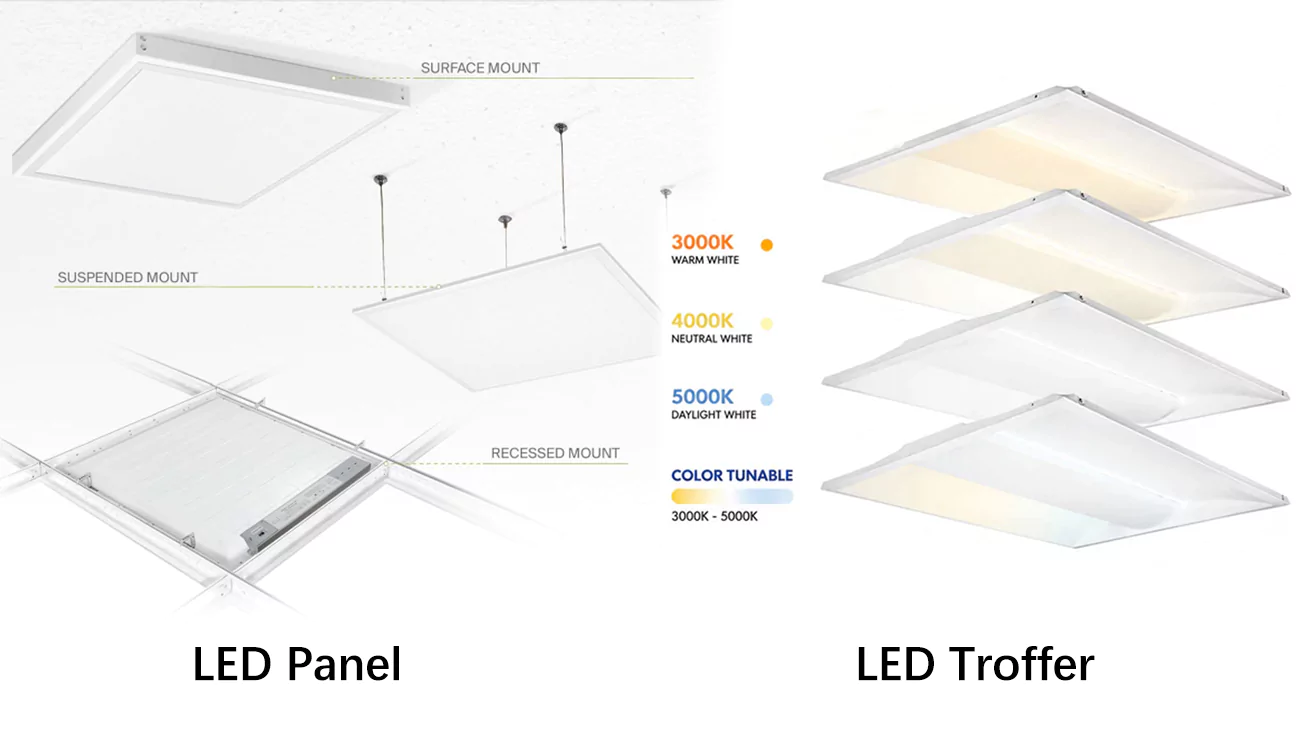
An LED troffer light is a square or rectangular recessed luminaire built specifically for standard T-bar ceiling grid systems. The name combines “trough” and “coffer”—a reference to the slot-style housing that sits inside the ceiling grid. Early models used T8 and T12 fluorescent lamps with magnetic or electronic ballasts. Today’s integrated LED troffers retain the same form factor and mounting footprint while delivering dramatically higher efficiency.
The defining feature of an LED troffer is its deep-cavity backlit structure—LED sources are evenly distributed across a metal backplate, and light passes directly through a diffuser lens to create uniform illumination. This sealed cavity (typically 3 to 5 inches deep) incorporates reflective surfaces that ensure even light distribution while enabling efficient passive heat dissipation. This mature backlit architecture supports stable long-term low-lumen-depreciation performance and compliance with mainstream North American commercial energy efficiency standards.
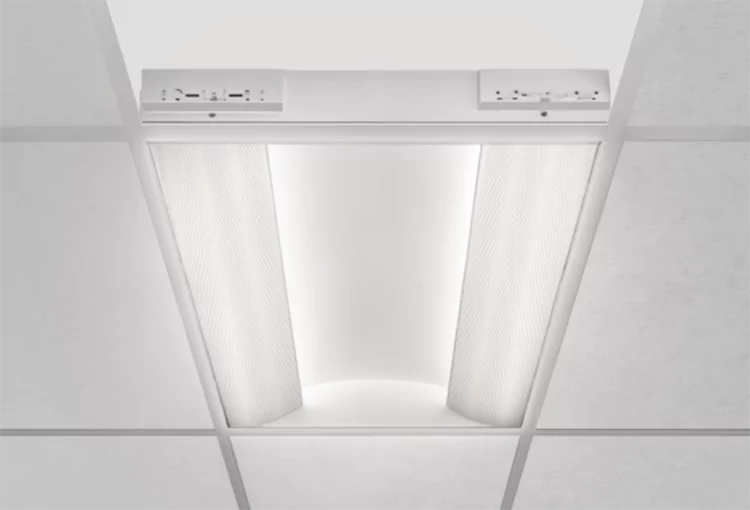
LED troffers come in highly standardized sizes that fit common commercial ceiling grids. The dominant formats are 2×2 ft (610×610mm) and 2×4 ft (610×1219mm), suitable for open offices, conference rooms, retail spaces, and large public areas. The 1×4 ft (305×1219mm) size is ideal for narrow corridors, walkways, and equipment rooms with limited ceiling space. At typical 8–12 ft ceiling heights, 2×2 ft or 2×4 ft troffers spaced 8–10 ft apart deliver 35–45 foot‑candles at the workplane.
In terms of performance, LED troffers typically deliver luminous efficacy of 120–167 lm/W, while Higntek’s custom LED modules for high-end commercial projects can achieve 180–265 lm/W. Their L70 rated life spans 50,000–100,000 hours—equivalent to 11–23 years at 12 hours of daily operation. Optimized LED spacing and matched optical lenses ensure excellent uniformity; the fixtures support 0‑10V and DALI‑2 dimming, with color temperature consistency held within 3 SDCM. Professional optical designs deliver outstanding glare control, achieving UGR values as low as 16–19—ideal for long-hour office work. The modular construction allows drivers and LED strips to be replaced individually without removing the entire fixture, greatly simplifying maintenance. On the downside, upfront costs are slightly higher than standard panel lights, installation requires a minimum 3‑inch plenum depth, and operation above 45°C without adequate heat sinking can shorten lifespan by 30–50%.
LED troffers are widely used in demanding commercial environments that require low glare, high stability, and extended run times: office workstations, classrooms, hospitals, government buildings, conference rooms, and retail spaces.
An LED panel light is an ultra‑thin, low‑profile planar luminaire that delivers bright, uniform area illumination. Compared with traditional fluorescent fixtures and standard troffers, modern LED panels feature a slim profile, seamless ceiling integration, and minimalist aesthetics—making them the preferred solution for decorative ambient lighting in contemporary commercial interiors and renovation projects.
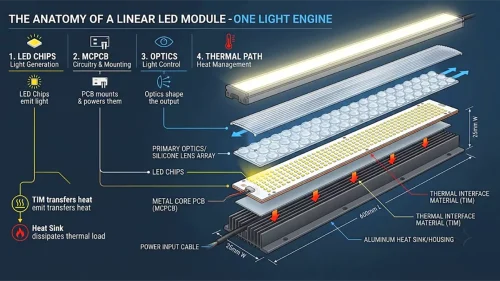
A panel light consists of six core components: LED light source; light guide plate (LGP) that directs the LED light toward the diffuser; diffuser plate that spreads light evenly outward with anti‑glare capability; reflective film that returns any downward‑leaking light back into the LGP; heat sink that conducts heat away to maintain safe operating temperatures; and aluminum frame and back cover that protect components and prevent edge light leakage. Without a heavy metal cavity, this ultra‑flat design fits perfectly into ceilings with extremely shallow plenum spaces.
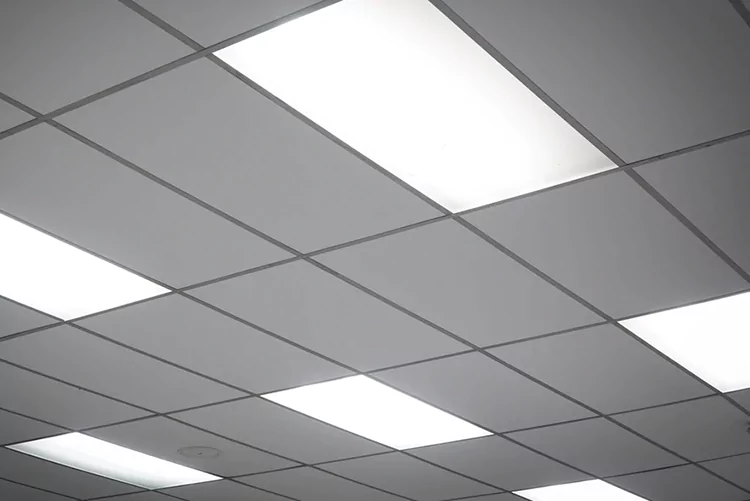
Panel lights are available in two optical architectures.
- Edge‑lit panels have LEDs mounted along the perimeter of the frame; light enters the LGP horizontally and is redirected downward to produce uniform brightness. Thickness is typically only 10–12 mm (about 0.4–0.5 inches), with some designs as thin as 0.3 inches. Edge‑lit panels are 30–40% lighter than backlit models, and the driver can be integrated into the frame for direct surface‑mounting to a junction box.
- Backlit panels have LEDs mounted directly on the backplate, shining vertically through the diffuser. Eliminating the LGP removes the risk of yellowing, and the fixture delivers higher brightness at the same wattage. However, because space is needed between the light sources and the diffuser to achieve uniformity, backlit panels are thicker than edge‑lit types—currently about 35 mm or less, roughly twice the thickness—and they can only be installed in recessed grid ceilings, with uniformity reaching 0.9 or above.
Standard sizes for global commercial grids include: 2×2 ft (600×600mm)—small offices, partitioned workstations, and small meeting rooms; 2×4 ft (600×1200mm)—open offices, classrooms, retail stores, and large public areas; and 1×4 ft (300×1200mm)—narrow corridors and densely obstructed ceiling zones.
Key advantages of LED panel lights include:
- Ultra-thin profile (side-emitting versions are only 8–15 mm thick, with installation gaps as small as 5 mm);
- Flexible installation options (recessed, surface-mount, ceiling-mount);
- Soft, uniform, shadow-free lighting (premium low UGR versions UGR<19);
- L70 rated lifespan of 50,000–150,000 hours;
- Mercury-free, recyclable construction; and native 0-10V dimming and adjustable color temperature;
- Weight is also a major advantage: a standard 2×4-foot panel light weighs only about 7 pounds (3.2 kg), making it easy for a single person to install; some models are even lighter, weighing only 4-6 pounds.
The limitations are significant, though: edge‑lit panels concentrate heat on the frame‑mounted LED strips; low‑cost PS light guides without UV stabilizers can develop irreversible yellowing within 1–2 years of continuous use; standard edge‑lit panels achieve only 80–90 lm/W; and the fully sealed integrated construction means any single‑point failure requires complete fixture replacement, making maintenance costly.
Panel lights excel in minimalist visual effect and soft ambient illumination: open‑plan lounge areas, hotel lobbies, clinic waiting rooms, school libraries, shopping malls, airport transit zones, and high‑end decorative interior projects.
Although both are popular recessed ceiling fixtures that share compatible T‑bar sizes and can replace legacy fluorescent tubes, LED panel lights and LED troffers represent two completely independent technology paths with no universal interchangeability. To truly understand their differences, a comparative analysis is needed from the perspectives of structural design, installation methods, lighting optics experience, module layout, maintenance, and cost.
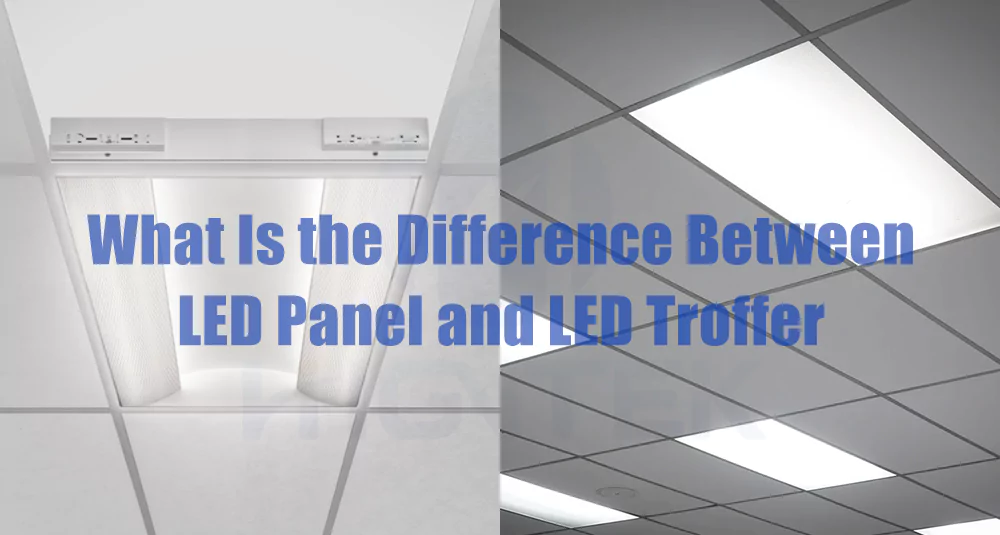
Structurally:
LED panel lights are very thin (typically less than 0.5 inches), with a flat rectangular shape and light weight. Sometimes, side-emitting LED modules are used to achieve an extremely thin profile. This involves moving the LEDs to the frame and using an LGP (light guide plate) to “bend” the lateral light into vertical emission, thus compressing the thickness to 8-15 mm.
LED slot lights, on the other hand, are deeper (3 to 5 inches deep metal cavity), with a shape similar to the traditional fluorescent tube light fixtures they are intended to replace. Depending on the fixture style, they may feature more prominent reflectors or louvered elements. Their internal backlight LED modules are densely packed with high-efficiency LEDs, with light being evenly distributed after repeated reflections within the cavity. The deep cavity of the slot light is not only an optical structure but also a core component for heat dissipation.
Optical Experience:
The difference in optical experience also stems from the structure. Recessed lighting fixtures use louvers, prism lenses, and reflectors to shape light into a precisely directional beam. With UGR values as low as 16–19, they are ideal for office and educational environments requiring focused lighting.
While panel lights only provide downward, direct light, they possess inherent diffuser properties—lenses and extender panels transform point light sources into low-glare surface light sources, providing soft, shadowless light for a visually comfortable and relaxing experience. Provides more uniform lighting (0.9 or higher) over large areas, and completely eliminates the risk of yellowing due to the absence of LGP – which is crucial for long-term projects.
Installation and Maintenance:
Installation and maintenance differences manifest in practical on‑site convenience. Troffers must be recessed into standard T‑bar grids with at least 3 inches of plenum depth; the driver‑separate design means maintenance only requires replacing faulty components without disturbing the entire fixture. LED troffers lights, due to their increased size, may require more manpower and time to install.
Panel lights are far more forgiving—recessed, surface, or suspended mounting all work, with only 5mm plenum clearance needed, and the driver can be integrated into the fixture for direct junction‑box mounting. The trade‑off is a fully sealed integrated structure where any single‑point failure requires complete replacement. Backlit panels return to the T‑bar grid, with installation conditions identical to troffers.
Cost:
Cost presents a counterintuitive picture. Edge‑lit panels have the lowest upfront cost—roughly one‑third to one‑half the unit price of troffers. However, troffers are primary beneficiaries of programs like the U.S. Department of Energy’s Better Buildings Alliance efficient troffer specifications. Compliant high‑efficiency troffers deliver 45% higher efficacy than traditional fluorescent troffers, with energy savings reaching 75% when combined with dimming or occupancy controls. These tangible energy savings, plus modular maintenance advantages, make long‑term operation more cost‑effective. While the panel is energy-efficient and lighter (approximately 50% lighter than traditional fluorescent troughs, allowing for single-person installation), the maintenance cost of complete replacement in large-scale applications can be substantial if quality is inconsistent. Its internal LED lighting modules play a decisive role.
| Dimension | LED Troffer (Deep-Cavity Backlit) | LED Panel (Edge-Lit) | LED Panel (Direct-lit / Backlit) |
|---|---|---|---|
| Overall Structure | Deep-cavity backlit, 3-5″ metal reflective cavity | Ultra-slim aluminum frame + LGP, overall thickness 8-15mm | Backplate full LED array + diffuser sheet, total thickness ~35mm |
| LED Module Position | LEDs fully covered on entire metal backplate | LEDs only installed on four surrounding frame edges | LEDs fully covered on entire metal backplate |
| Luminous Efficacy | 120-167 lm/W; premium customized modules reach 180-265 lm/W | Standard version 90-120 lm/W; high-end micro-prism model max 160 lm/W | Stable 120-140 lm/W, no light loss from LGP absorption. Our can achieve 190 lm/W. |
| UGR Rating | Adjustable range 16-19 via parabolic louver & micro-prism optics | Basic model UGR>22; premium micro-prism version UGR<19 | Steady UGR 17-20, balanced softness & directional light |
| Installation Methods | Only compatible with T-bar grid recessed mounting | Three options: T-bar recessed, surface-mounted on ceiling, suspended hanging | Only compatible with standard T-bar grid recessed mounting |
| Minimum Required Plenum Depth | ≥3 inches (76.2mm) | ≥5mm ultra-shallow ceiling gap | ≥3 inches (76.2mm) same as troffer |
| Net Weight (2×4ft Spec) | Heavy, 10-12 lbs per unit | Lightweight, around 7 lbs; single worker full installation | Medium weight, 8-10 lbs per unit |
| Thermal Management Performance | Excellent: full metal backplate + cavity passive convection heat dissipation | Poor: all heat concentrated on thin border LED strips, limited heat conduction area | Good: metal-core PCB backplate uniform heat conduction without cavity convection |
| Relative Unit Cost Level | Medium-High initial procurement cost | Lowest upfront purchasing cost | Medium initial procurement cost |
| Core Applicable Scenarios | Long-hour office workstations, classrooms, medical facilities, government public buildings | Renovation projects with shallow ceiling, decorative ambient lighting, hotel lobbies & corridors | Supermarkets, clean workshops, high-ceiling office spaces with sufficient plenum space |
Stepping back, choosing between these options ultimately answers one fundamental question: does this space need efficacy or optical experience? Troffers exist for the former—precision, stability, control, durability. Panels exist for the latter—aesthetics, softness, slimness, integration. Neither is inherently superior; each serves different design priorities. Understanding this transforms selection from a technical parameter stacking exercise into a clear judgment about spatial intent.
Last year, when we were selecting lighting fixtures and developing LED modules for a mid-sized corporate campus project, the client initially favored a full-fledged use of side-emitting panels to control their budget. We helped them conduct a five-year total cost of ownership analysis using standard panel lights—considering energy efficiency, modular maintenance, and a longer effective lifespan (thanks to superior thermal management)—and found that the total cost of the recessed lighting was approximately 8% lower than the panel light solution. Our analysis revealed the problem lay in the thermal control and brightness of the standard panel lights. Ultimately, we revamped the internal LED module design of the panel lights, adjusting the LED chip types, optics, and electrical drive engineering. This ensured the stability of the panel lights’ lifespan, allowing them to fully realize their cost-effectiveness. This case serves as a reminder to decision-makers: similar lighting fixtures are only superficial; the deciding factors are long-term results and the internal LED modules.