Customized full-spectrum LED plant grow light modules for Mexican greenhouses
Commercial industry
Location
Querétaro, Mexico
Time
2026
Customer Type
Professional horticulture lighting manufacturer
Application
LED grow light system
Product
horticulture LED module
LED module solutions
Full Spectrum + Adjustable Spectrum LED Module
Project Background:
In March 2026, Higntek participated in the development of a customized LED grow light module project for a professional horticulture lighting manufacturer serving commercial greenhouse and indoor farming applications in Mexico.
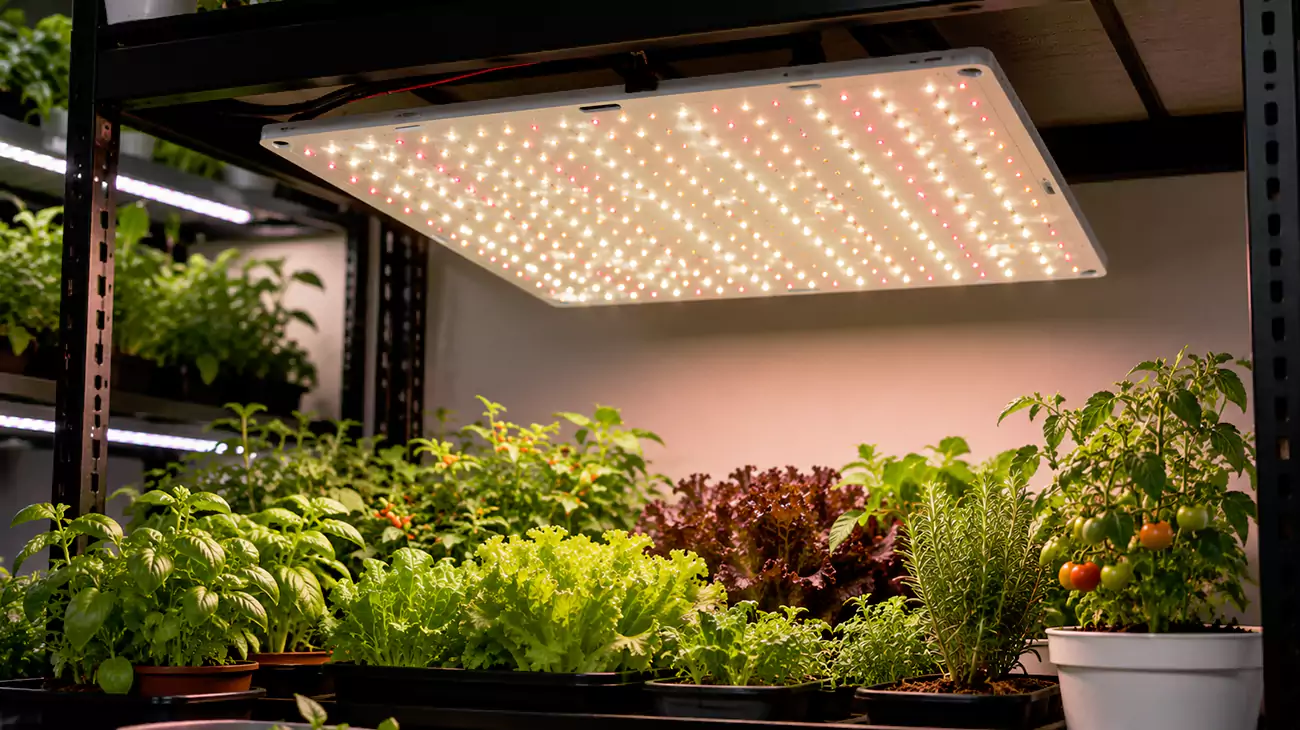
The customer was developing a new generation of square LED grow light systems for commercial cultivation environments. Their goal was not simply to increase brightness, but to create a more efficient and flexible horticulture lighting platform that could support different plant growth stages through optimized spectrum control.
During the early technical discussion, we quickly identified that this project required a different approach from conventional LED lighting development.
For general illumination, higher lumen output is usually the primary target. However, in horticulture lighting, plants do not respond to visible brightness alone. The effectiveness of artificial lighting depends heavily on how efficiently photons are delivered within specific wavelengths that influence photosynthesis, morphology, and plant development.
Therefore, our design focus was built around three key factors:
- spectrum quality;
- photon efficiency;
- long-term thermal reliability.
Customer Needs:
As the horticulture lighting market becomes more advanced, their customers are no longer satisfied with traditional “white + red LED” solutions. Commercial growers increasingly require lighting systems that can precisely control plant responses during different growth stages.
For example:
- blue wavelengths influence compact plant morphology and leaf development;
- red wavelengths between 600–700nm contribute significantly to photosynthetic activity;
- far-red wavelengths can influence plant architecture and flowering response;
- UV wavelengths can be used carefully to regulate plant characteristics and secondary metabolite production.
From our experience working on LED module projects, we found that many early-stage horticulture products focus heavily on adding more red LEDs because red light provides high photosynthetic efficiency. However, a high-performance grow light is not simply a “red-heavy” lamp.
The real engineering challenge is creating a balanced spectrum that provides plants with the right photons at the right wavelengths while maintaining electrical efficiency, thermal stability, and commercial production feasibility. This was the reason the customer approached Higntek: they needed more than PCB assembly. They needed a partner who could participate in LED architecture decisions. During the project discussion, the customer shared several limitations of their existing solution.
The first challenge was product flexibility.
Different plants require different spectral strategies during different growth stages. A propagation stage may require a different blue/red balance compared with flowering or fruiting stages. Previously, developing different lighting products for different plants increased:
- product SKU complexity;
- development cost;
- inventory pressure.
The customer wanted one LED module platform that could support multiple cultivation scenarios.
The second challenge was improving photon output while reducing power consumption.
Unlike traditional lighting applications, horticulture customers evaluate performance based on how efficiently electrical energy is converted into useful plant photons. Therefore, the customer required:
- higher PPF output;
- improved PPFD utilization;
- lower system power consumption.
The third challenge was environmental reliability.
Commercial greenhouse environments create additional risks:
- high humidity;
- long daily operating hours;
- possible sulfur-containing compounds.
LED degradation caused by sulfur corrosion is a common issue in agricultural environments. Therefore, the LED package and PCB protection design needed to consider long-term reliability from the beginning.
| Requirement | Customer Expectation |
|---|---|
| Spectrum | Full spectrum with adjustable channels |
| Plant Growth Support | Different growth stages |
| Efficiency | High photon output with reduced power |
| Protection | Anti-sulfurization & moisture protection |
| Thermal Performance | Stable operation under high power |
| Control Method | Simple and cost-effective switching |
Higntek's Solutions:
When we started the design evaluation, we identified that the biggest challenge was not the PCB size itself, but how to balance spectrum performance, efficiency, heat dissipation, and manufacturing cost.
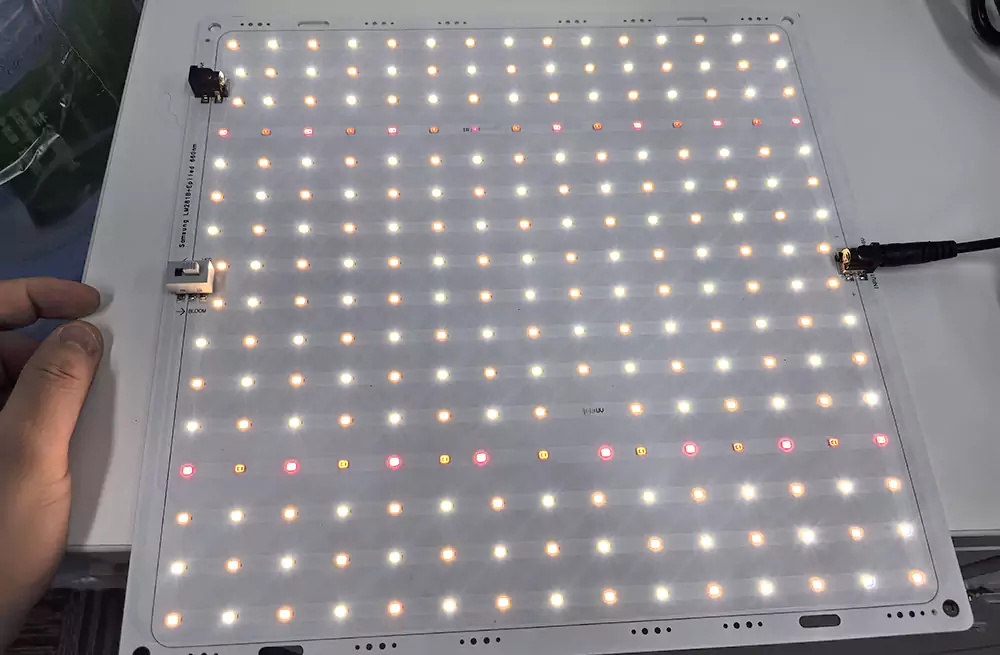
Designing the appropriate spectrum.
Many growers understand the importance of red light, but commercial plant growth depends on a much broader spectrum relationship. For this project, we designed the module around:
- white full-spectrum LEDs as the foundation;
- red wavelengths for photosynthetic enhancement;
- far-red consideration for plant morphology regulation;
- UV support for advanced cultivation requirements.
The challenge was controlling the ratio. Too much red light may increase photon efficiency but can reduce spectrum balance. Too little blue light may affect plant structure. Excessive UV can also create stress rather than benefits. Therefore, our approach was not simply maximizing one wavelength, but optimizing the overall spectral composition.
Thermal Management Under High Power Density.
The final module size was 300 × 300mm, but the operating power requirement was significant. At maximum testing: 105W input power. The module needed to maintain stable temperature during continuous operation. Based on our previous high-power LED module experience, we recommended:
- aluminum PCB;
- 1.6mm thickness;
- 1.5W thermal conductivity material.
This decision increased material cost slightly, but it significantly improved thermal reliability. For commercial growers, lighting systems often operate more than 12 hours per day. A small thermal issue in the prototype stage can become a large maintenance problem after thousands of operating hours.
Technical parameters of Higntek solutions.
Our design philosophy was: Create a flexible horticulture lighting platform that allows growers to adapt spectrum requirements without developing multiple independent products.
The final module specification:
| Parameter | Specification |
|---|---|
| Module Size | 300 × 300 mm |
| PCB Thickness | 1.6 mm |
| Thermal Conductivity | 1.5 W/m·K |
| Driver Type | Constant Current |
| Protection | Transparent conformal coating |
High-Efficiency LED Selection
According to the customer’s performance requirements, we selected: Samsung LM281B+ Pro horticulture LED series.
- 3000K Ra80 white LEDs;
- 5000K Ra80 white LEDs.
The two CCT ranges were arranged alternately to provide a more balanced spectrum distribution. For white light operation:
| Operating Mode | Power | Efficiency |
|---|---|---|
| White spectrum | 20W | ≈200 lm/W |
| White spectrum | 50W | ≈180 lm/W |
Multi-Spectrum Architecture.
To improve plant response efficiency, we integrated additional wavelength channels:
- 660–665nm deep red;
- 620–630nm red;
- UV LED;
- IR LED.
The purpose was not only increasing output but giving growers more control over plant development. By separating different wavelength circuits, the customer could activate different lighting modes according to cultivation requirements.
Low-Cost Spectrum Switching Design.
Instead of using a complex software control system, we proposed a DIP switch-based control solution. This decision came from our understanding of commercial cultivation customers. Many growers prioritize:
- reliability;
- simple operation;
- reasonable system cost.
The DIP switch approach allows users to select different spectrum combinations without additional control hardware investment.
Protection & Installation Design.
To improve environmental durability, We applied transparent conformal coating on the LED module surface. The coating provides:
- moisture resistance;
- anti-sulfurization protection;
- additional environmental protection.
Meanwhile, two waterproof direct-insert terminals were integrated for easier installation and maintenance.
Project Results:
After prototype completion, we conducted electrical, thermal, and reliability verification. The module was tested under:
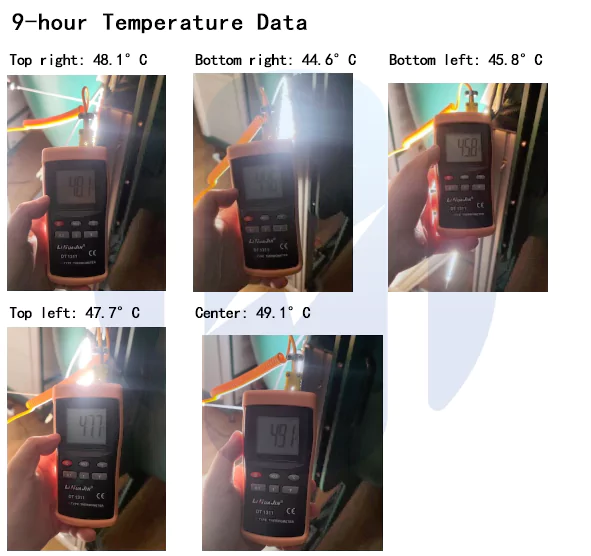
| Test Condition | Result |
|---|---|
| Ambient Temperature | 25℃ |
| Maximum Input Power | 105W |
| Test Duration | Continuous operation |
| Thermal Result | Center temperature below 50℃ |
During the test, the LED did not malfunction, the coating did not crack, and the electrical performance remained stable.
Performance Summary:
| Item | Result |
|---|---|
| Maximum Tested Power | 105W |
| Center Temperature | <50℃ |
| White Spectrum Efficiency | Up to 200 lm/W |
| 50W White Mode Efficiency | ≈180 lm/W |
| 50W With Red Spectrum | ≈170 lm/W |
Through this project, Higntek helped the customer achieve a more flexible horticulture lighting platform. The biggest value was not only improving LED efficiency, but helping the customer reduce future product complexity. With one modular architecture, the customer can develop lighting products for different cultivation scenarios while maintaining consistent manufacturing processes.
From our engineering perspective, this project reinforced an important point:
A successful grow light module is not defined by the number of LEDs installed on a PCB. It is defined by how effectively electrical energy is converted into useful plant growth energy while maintaining reliability over thousands of operating hours.
Why Choose Higntek?
Clients choose Higntek because we offer more than just manufacturing support.
We participate in initial LED spectrum strategy discussions and conduct complete optical configuration, PCB architecture, thermal design, protection solutions, and production feasibility assessments. For horticultural lighting manufacturers, choosing an LED module partner is not just about finding a factory that can assemble components; the key is finding an engineering partner who understands plant optical spectrum design and electrical efficiency. Higntek helps clients transition from concept development to stable mass production with fewer design iterations and lower development risk.
Build Your Next High-Performance LED Grow Light Solution
Higntek provides custom horticulture LED modules with optimized spectrum design, thermal management, and production-ready engineering support.
Share:
More Posts:
Post Category:

Dai Shunli
Founder & CEO
I founded the Higntek brand in 2013. Driven by technology, we provide high-efficiency LED module customization, development, and manufacturing for professional lighting applications. Leveraging over a decade of expertise in the LED lighting field, we offer one-stop OEM lighting solution manufacturing services, from theoretical design to production, including: requirements analysis, solution design, prototype development, testing and verification, and mass production. We are committed to providing customized manufacturing for the unique lighting needs of different industries, application scenarios, and customers.
Through continuous development, Higntek now has a 3,000-square-meter factory and over 200 employees, providing more than 1,500 customized LED solutions to customers worldwide. In the future, we will continue to uphold the principles of efficiency, excellence, and innovation, making the development and manufacturing of professional lighting modules simpler and more reliable.
Send Us A Message
On-Time Delivery 99.38%
Consistent production & reliable global delivery
End-to-End Engineering Support
From design optimization to production guidance
3-Day Rapid Prototyping
Fast sampling to accelerate product validation
100% Quality Inspection
Full testing ensures stable and reliable performance