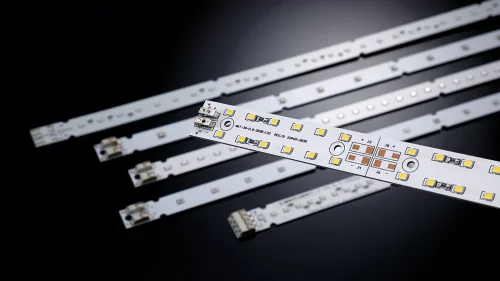
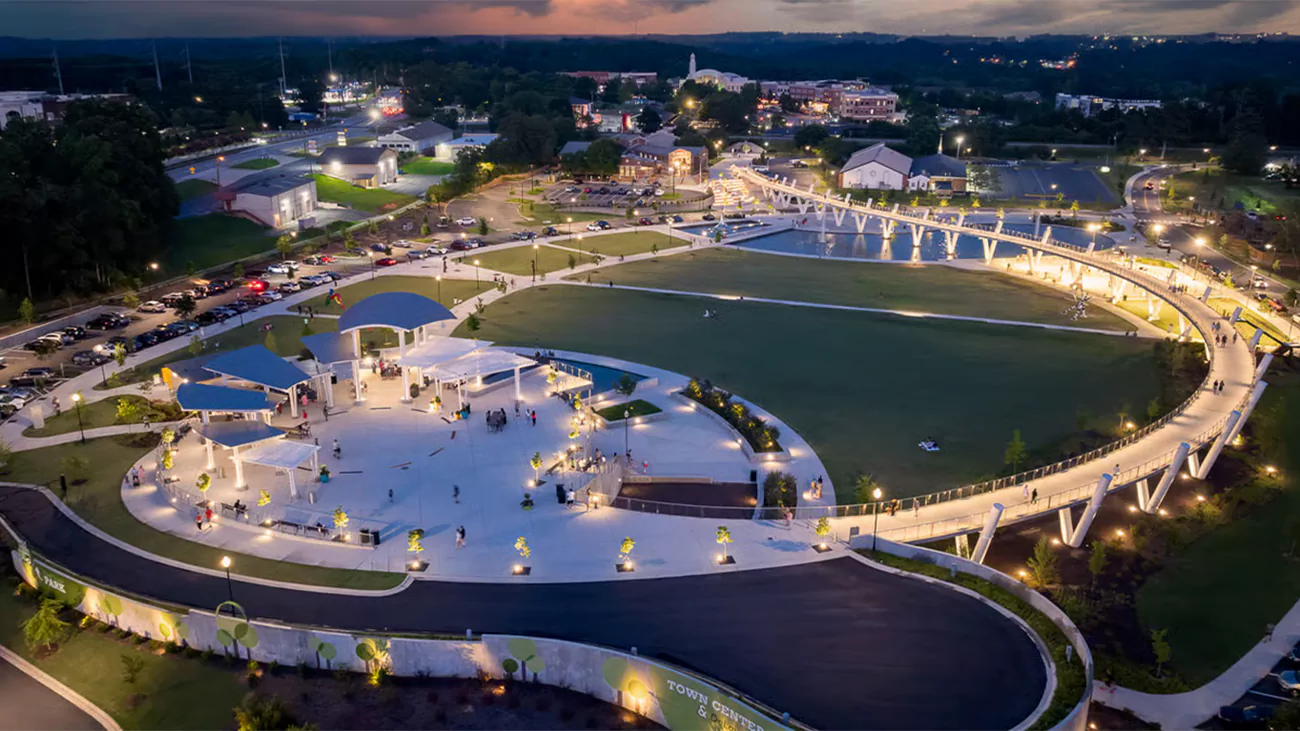
Compared to indoor lighting, the biggest difference with in-ground landscape lighting is that it offers virtually no opportunity for repairs. Once installed, the lights need to be buried in the ground for an extended period, continuously enduring rain, mud, damp conditions, and mechanical stress from pedestrians, bicycles, and even maintenance vehicles. If the modules experience light decay, water ingress, or thermal failure, subsequent maintenance will not only be costly but will also affect the continuity of the entire public landscape.
Therefore, while the client’s initial requirements may seem like just a few parameters, each one actually corresponds to long-term operational reliability requirements.
For example, the project required 3000K warm white light with a color tolerance controlled within 3 SDCM. This is not merely about achieving uniform color temperature parameters, but also about ensuring that dozens or even hundreds of light fixtures within the same park do not exhibit visible color differences when illuminated at night; otherwise, the overall landscape effect would be significantly compromised.
Furthermore, since the lights are primarily intended to illuminate trees and building structures, the client desires narrow beam angles to minimize light spill while maintaining illuminance and maximizing light utilization.
In summary, the client’s main concerns are concentrated in the following areas:
| Requirement | Target |
|---|---|
| Color Temperature | 3000K Warm White |
| Luminous Flux | >2000 lm |
| Beam Control | 15°–40° Narrow Beam |
| Color Consistency | ≤3 SDCM |
| Reliability | Outdoor Long-life Design |
| Thermal Management | Optimized Heat Dissipation |
Engineering Challenges.
From an engineering perspective, the real challenge of this project wasn’t achieving 2000 lumens, but ensuring the modules could operate stably for many years within a limited installation space.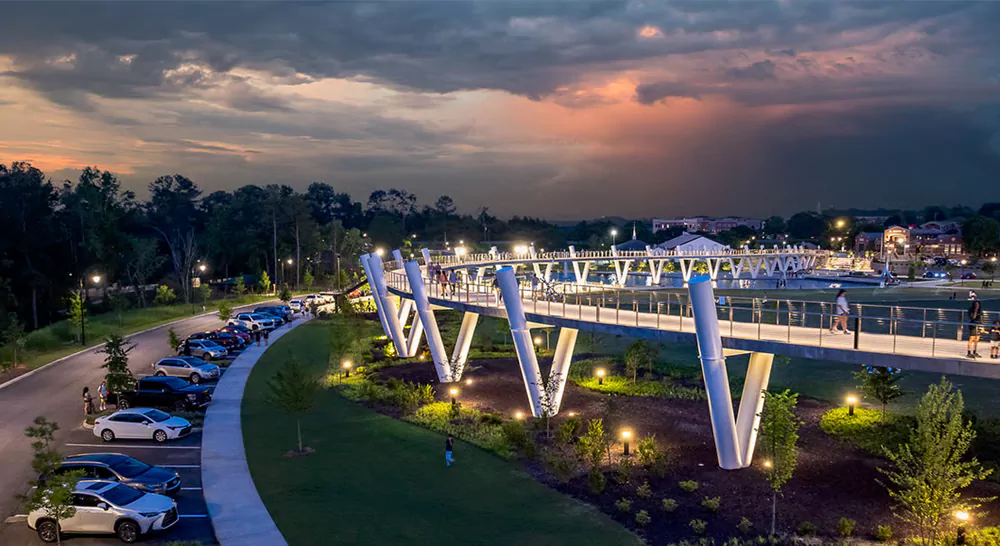
- First and foremost is heat dissipation. In-ground lights are installed inside enclosed fixtures with almost no natural air convection. Compared to ordinary streetlights or floodlights, the heat generated by LEDs is much harder to dissipate quickly. Insufficient heat dissipation design can lead to accelerated light decay, color drift, and even shortened lifespan even if initial product testing is normal. Based on our past experience with outdoor landscape projects, these applications rely more heavily on the thermal conductivity between the PCB and the overall fixture structure than ordinary indoor lighting. Therefore, from the initial design stage, we considered thermal management as one of the core elements of the entire design.
- Another challenge stems from environmental reliability. Public parks are open 24/7, meaning lighting fixtures are constantly exposed to rain, silt, and winter de-icing salt. While the modules themselves aren’t ultimately waterproof, the PCBs and electronic components still need sufficient environmental resistance to mitigate the risks of long-term corrosion.
- Finally, and perhaps most easily overlooked in landscape lighting, is beam control. Many projects prioritize brightness, neglecting the fact that the direction of light, not its quantity, truly determines the landscape effect. Poor beam angle control, even with high lumens, will fail to accurately highlight tree and building details.
Therefore, we believe this project truly requires a holistic balance of light, heat, and environmental reliability, rather than optimizing a single parameter.
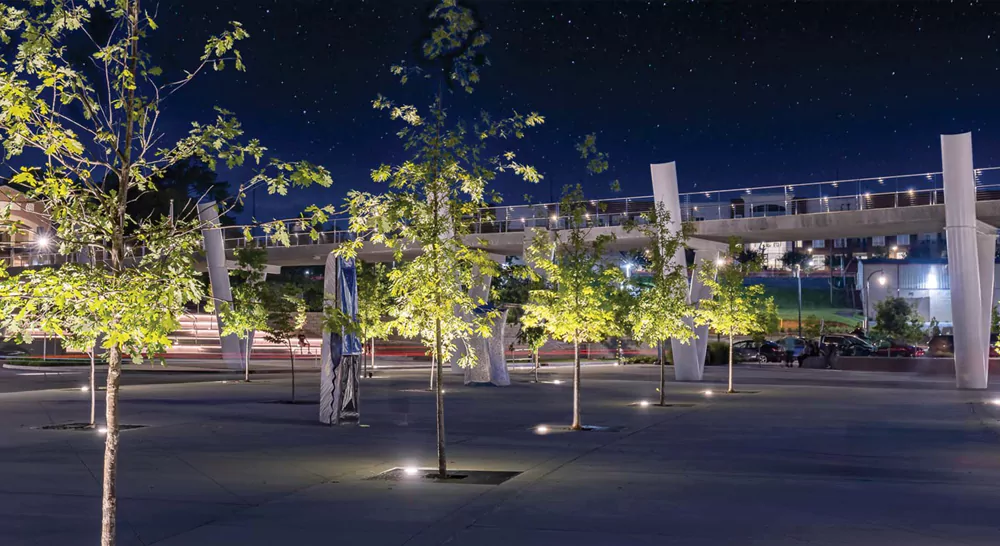
After the project samples were completed, the client prioritized verifying the overall landscape effect, not just laboratory test data. The final nighttime scene showcased a clearer hierarchy of light and shadow among the walkways, plazas, and trees. A uniform 3000K warm white light, coupled with consistent color tolerance control, ensured a more harmonious nighttime visual experience throughout the park, preventing color variations between different light fixtures from affecting the overall experience.
Furthermore, thanks to the unified module platform design from the outset, we not only assisted the client with module development at the engineering design level but also simultaneously provided SMT production support, reducing the time spent on repeated communication and verification among multiple suppliers.
Ultimately, the overall product development cycle for this project was shortened by approximately 35% compared to the client’s original plan, helping our lighting manufacturing partners complete sample verification and project delivery faster.
It is worth mentioning that the Suwanee Town Center Main Street project ultimately received the **APWA Georgia Chapter “Project of the Year” award**. This award is a testament to the entire project team’s achievement, and we are delighted that the LED modules we helped develop were a stable and functional part of the project.
| Result | Achievement |
|---|---|
| Luminous Flux | ≈2500 lm |
| Efficiency | 165 lm/W |
| Color Consistency | ≤3 SDCM |
| Development Cycle | Reduced by ~35% |
| Landscape Effect | Improved lighting hierarchy & uniformity |
| Project Recognition | APWA Georgia Project of the Year |
Why Choose Higntek?
Every outdoor landscape lighting project has a different luminaire structure, installation method, and lighting objective. Therefore, we don’t usually recommend “standard modules” directly. We prefer to understand the customer’s application scenario first, and then conduct a holistic design around the luminaire structure, electrical architecture, thermal management, and optical distribution. This ensures that the LED module truly serves the final lighting effect, rather than merely meeting data specifications.
For landscape lighting, a stable and reliable LED module not only determines whether the luminaire can light up today, but also whether it will maintain consistent color temperature, brightness, and reliability for years to come.
If you are developing similar projects, such as:
- Park Landscape Lighting
- In-ground Lighting
- Tree Uplighting
- Architectural Accent Lighting
- Municipal Outdoor Lighting
Welcome to discuss your lighting project needs with the Higntek engineering team. From requirements analysis, LED module design, optical solutions, PCB development to SMT mass production, we can provide complete one-stop LED module engineering and manufacturing support, helping you complete product development faster and reduce subsequent mass production and field application risks.