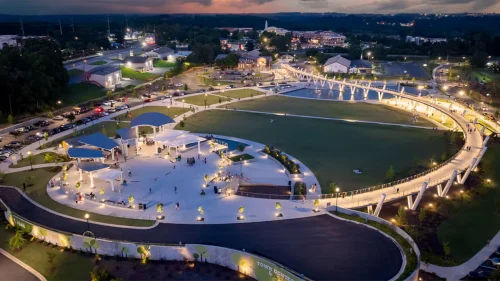
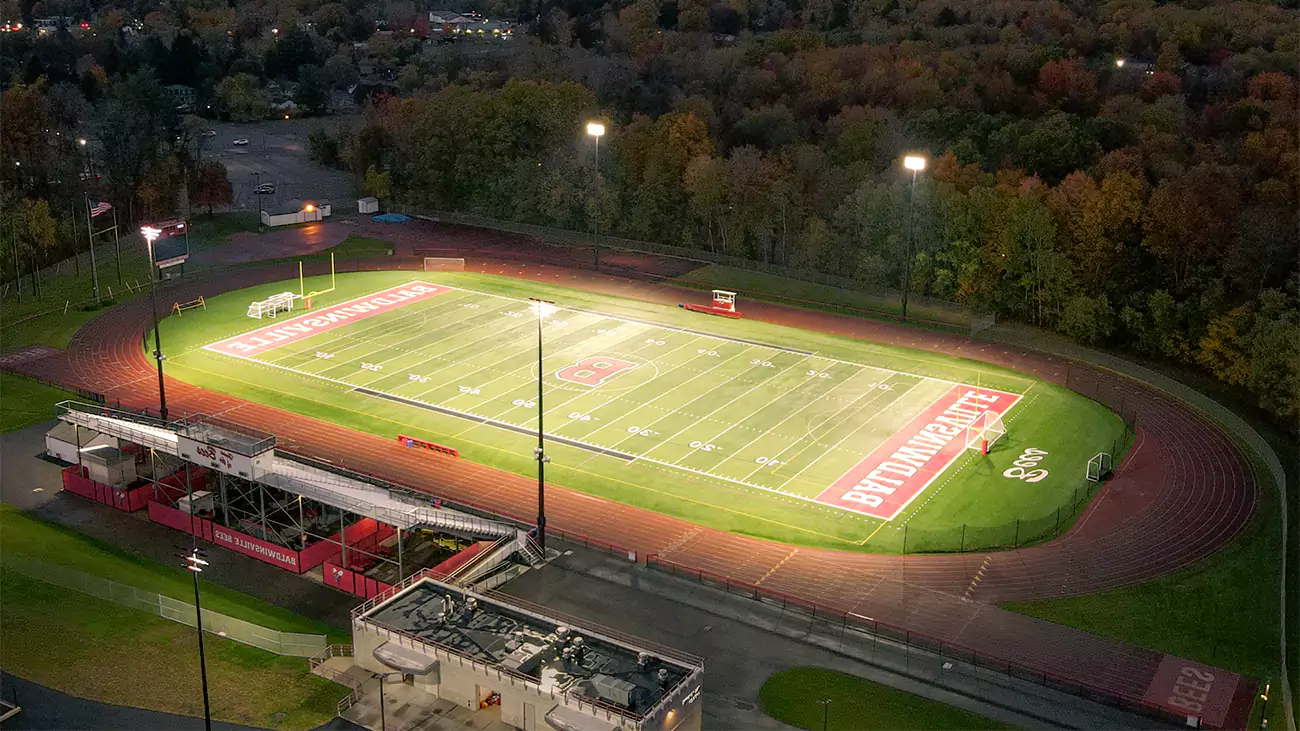
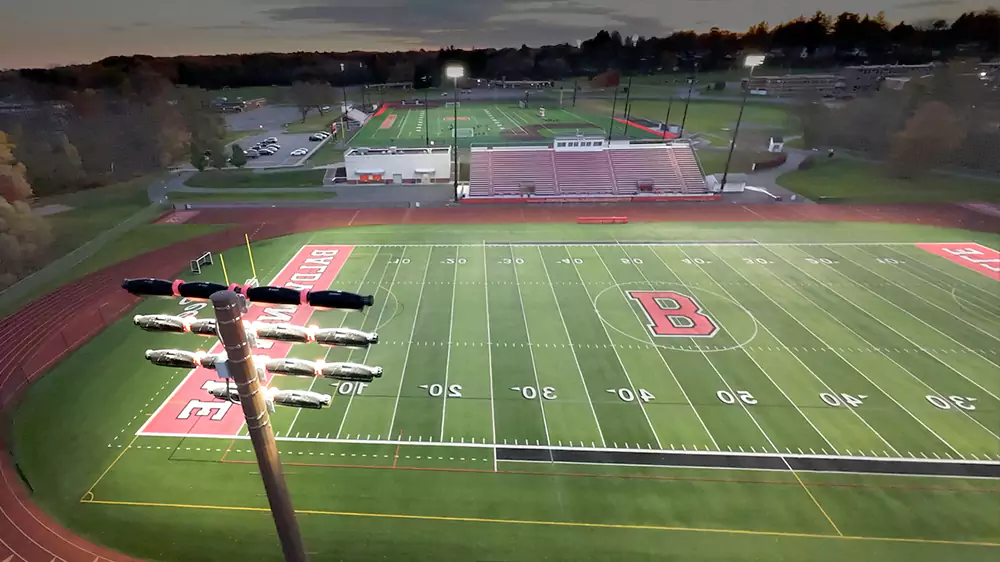
One lesson we’ve learned from sports lighting projects over the years is that “brighter lights” are rarely the real issue. Most stadium floodlights today achieve relatively high lumen output. The real challenge lies in maintaining lighting quality, efficiency, and reliability simultaneously. During the project initiation phase, we held multiple rounds of technical discussions with the client’s engineering team.
Our initial evaluation of the client’s existing luminaires revealed that while their previous generation of lighting fixtures was fully functional, its limitations were becoming apparent as market expectations evolved.
- Feedback from multiple projects indicated that lighting uniformity had become a problem in large stadiums. Certain areas of the field were significantly brighter than others, resulting in noticeable light spots and uneven illumination on the field surface.
While this issue might be acceptable for basic area lighting, it becomes more pronounced in sports applications because athletes require continuous visibility, and video recording quality is increasingly important. - Meanwhile, the client faced increasing pressure to improve energy efficiency. Their previous platform system-level energy efficiency was approximately 140 lumens/watt, which was competitive a few years ago. However, new project specifications and regional energy regulations are demanding higher performance.
- Thermal performance of existing designs is another concern. Since stadium floodlights operate in sealed outdoor enclosures and are frequently exposed to direct sunlight, internal heat buildup becomes a major factor affecting long-term reliability. From our perspective, this is perhaps the most critical issue that needs to be addressed in complex outdoor lighting modules exposed to direct sunlight and high temperatures. Many lighting equipment manufacturers focus too much on initial lumen output. We, however, are more concerned with performance after 20,000 or 30,000 hours of operation, as this ultimately determines customer satisfaction and maintenance costs.
- There’s also the issue of the on-demand LED lighting module development process itself. Previously, customers had to work with multiple partners, including LED suppliers, PCB manufacturers, lens suppliers, and driver manufacturers. This required significant time and manpower to coordinate between different suppliers, resulting in long sample verification cycles. Customers are looking for a partner that can cover everything from LED module development to optics and driver matching to shorten the overall development time.
The Engineering Challenges Behind the Project.
At first glance, the target specifications seem simple:
- System efficiency exceeding 180 lm/W.
- Luminous flux exceeding 10,000 lumens per luminaire.
- 50,000-hour lifespan.
- Multiple beam angle options.
- Outdoor reliability.
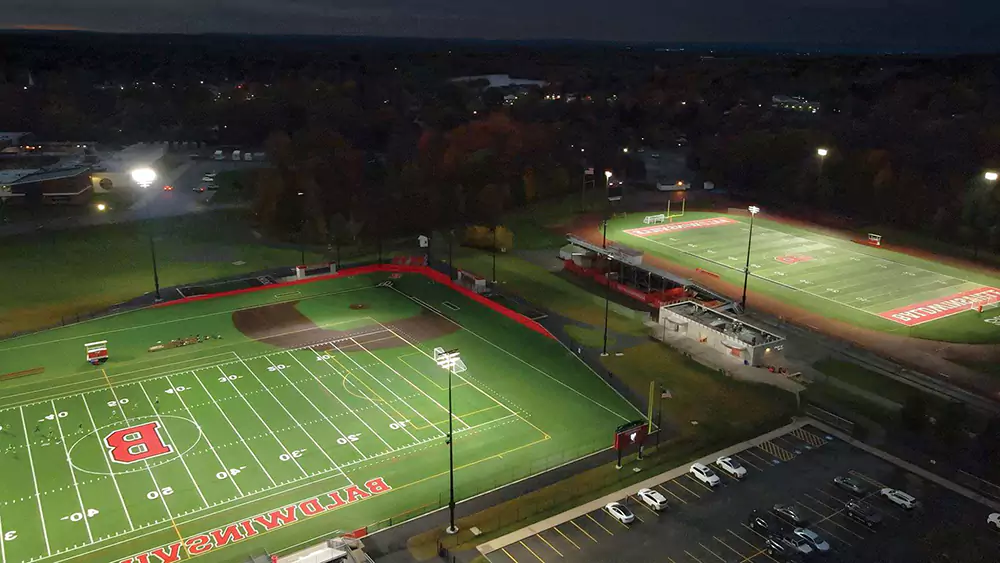
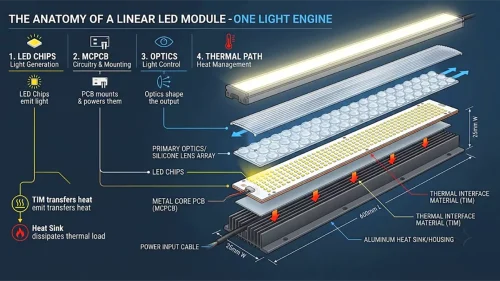
The primary challenge was thermal management. Each floodlight would utilize six LED modules, with a total power consumption of approximately 400 watts. At this power level, thermal performance was no longer a secondary consideration. One point we frequently observed during project reviews was that many thermal issues arose long before heatsink selection. PCB layout, copper foil distribution, LED spacing, and current path design all affected the efficiency of heat dissipation from the LED junctions.
The second challenge involved optical control. The customer wanted to support both 60° and 90° beam distributions using the same LED module platform. This would allow them to meet the needs of different stadium layouts without redesigning the entire lighting system. This requirement influenced almost all subsequent design decisions.
Finally, there was the issue of development efficiency. This client had previously sourced LEDs, optics, PCBs, and drivers from various suppliers. While technically feasible, this often led to delays when performance issues arose, as responsibility was distributed among multiple suppliers.
From a technical perspective, the real challenge of this project wasn’t achieving an output of over 10,000 lumens. Achieving high brightness isn’t particularly difficult with modern high-power LEDs. The real challenge lay in integrating all these requirements into a single lighting module, which involved several engineering trade-offs.
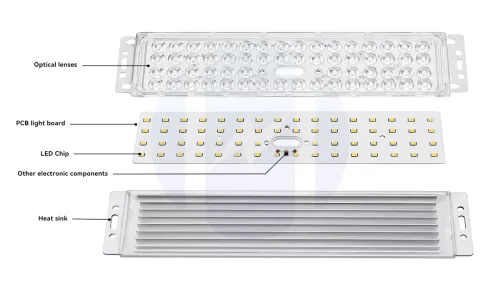
One decision we made early in the project differed from many people’s expectations. We didn’t start by selecting LEDs; instead, we began with the optics. For stadium lighting, the final illumination point is often more important than the amount of light produced. After evaluating several optical configurations, we selected a lens system with approximately 93% transmittance and developed two beam distribution angle schemes: 60° and 90°.
Only after confirming the optical architecture can we work backward to determine the selection of LED chips for the LED module. This ensured that the luminous efficacy met the actual lighting requirements, rather than optimizing based on theoretical lumen output.
| Item | Specification |
|---|---|
| PCB Type | Aluminum PCB |
| Thermal Conductivity | 2.0 W/m·K |
| PCB Size | 213 × 48 mm |
| PCB Thickness | 1.6 mm |
| LED Quantity | 64 pcs |
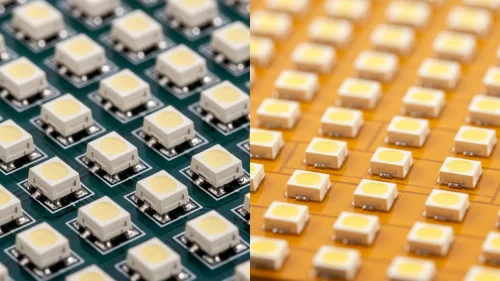
| LED Type | Lumileds 3030 |
| CCT | 5700K |
| CRI | Ra70 |
| Module Power | 60W |
| Module Voltage | 40–48V |
For the light source, we recommended the Lumileds 3030 LED. The reason wasn’t just its high luminous efficacy. For outdoor sports lighting, long-term reliability data is crucial. Our LM-80 LED series has a long proven history and extensive field performance record, making it an ideal choice for this project.
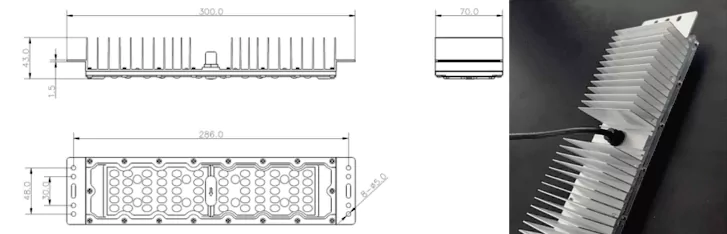
Throughout the development process, thermal management was a key focus. In addition to selecting an aluminum-based PCB with 2.0 W/m·K, we spent considerable time optimizing the copper distribution across the entire board. Copper’s role extends far beyond conductivity. When used properly, it helps the module dissipate heat more evenly, reducing hot spots and improving heat dissipation consistency between LEDs.
The module was then paired with a 6063 aluminum heatsink structure and integrated into the customer’s sealed outdoor luminaire design.
To provide sufficient power, each driver was designed to support three LED modules while offering comprehensive overvoltage, short-circuit, overcurrent, and 10kV surge protection. Because outdoor sports lighting systems often encounter harsh electrical conditions, especially during seasonal storms, robust surge protection was considered essential, not optional.
| Driver Parameter | Specification |
|---|---|
| Input Voltage | 120–277VAC |
| Output Voltage | 130–286VDC |
| Output Current | 300–1050mA |
| Max Power | 200W |
| Power Factor | ≥0.90 |
| Surge Protection | 10kV |
| Protection | OVP / OCP / SCP |
The improvements were almost immediately apparent when the first batch of production samples were tested.The most significant result was the increased system efficiency. The customer’s previous platform achieved a luminous efficacy of approximately 140 lm/W. Higntek’s final solution achieved a luminous efficacy of approximately 189 lm/W at the system level. This translates to a performance improvement of approximately 35% while maintaining the required lumen output.
| Parameter | Previous Platform | Higntek Solution |
|---|---|---|
| System Efficacy | 140 lm/W | 189 lm/W |
| LED Junction Temperature | Baseline | -18°C |
| Fixture Energy Consumption | Baseline | -20% |
| Beam Angle Options | Limited | 60° / 90° |
| Development Timeline | Baseline | -30% |
| Maintenance Accessibility | Moderate | Modular Design |
From an engineering perspective, the reduction in junction temperature was perhaps the most important result. Test results showed an average temperature reduction of approximately 18°C compared to the previous design. In our experience, this level of improvement can have a significant impact on luminous flux maintenance and long-term system reliability, especially in high-temperature outdoor environments.
Beyond the performance improvements, the customer was most impressed by the development efficiency. Because we provided a coordinated service encompassing LED selection, PCB design, optical integration, SMT assembly, and driver recommendations, the customer was able to reduce overall development time by approximately 30%. This allowed them to bring the new platform to market faster while reducing engineering coordination workload.
The customer has also integrated our LED lighting modules with a Bluetooth smart driver system to achieve remote brightness control. On-site managers can manage the entire venue’s lighting system through a single device, significantly improving ease of use.
Why Partner with Higntek?
Looking back at this project, its success wasn’t due to a single component or specification. It was because the lighting system was viewed as a complete engineering platform, not just a collection of individual parts.
Throughout the development process, our role went far beyond simply providing LED module manufacturing. We challenged assumptions, evaluated trade-offs, and helped our client make decisions that balanced efficiency, reliability, manufacturability, and long-term operating costs.
For outdoor sports lighting projects, this system-level thinking is often more valuable than pursuing the highest laboratory performance figures.
Ultimately, customers don’t just look at the lumen output on the datasheet when buying LED lighting modules. They’re buying years of reliable operation, lower maintenance costs, better lighting quality, and confidence in the product’s continued stable performance in the field.
This is precisely the engineering partnership that Higntek strives to provide.